
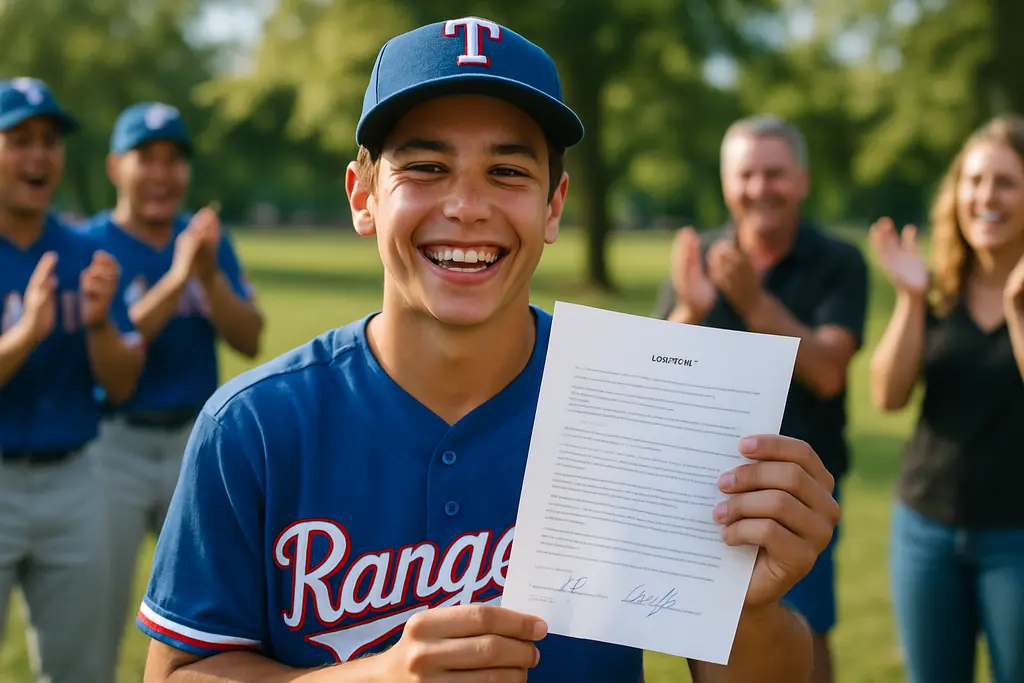

Rangers Signing Day became a record moment for the Texas Rangers Youth Academy on July 8, 2026, when 44 baseball and softball student-athletes from the Class of 2026 signed with collegiate programs at Globe Life Field in Arlington. The Rangers reported that it was the largest signing class in Academy history, moving the event from a simple college commitment ceremony into a public marker of player development in North Texas Rangers report.
The number alone mattered, but the setting mattered too. A signing ceremony inside the Texas Rangers’ major-league home carried a message for families who have spent years driving to practices, games, camps, and workouts: the local baseball and softball path can lead to college opportunities. For a community built around school fields, summer schedules, and family support, the event placed youth development at the center of a major-league venue.
What Rangers Signing Day Confirmed
Rangers Signing Day By The Numbers
The 44 signees represented the largest class since the Texas Rangers Youth Academy opened in 2018. The Rangers also reported that the Academy has now helped 187 attendees sign with college programs across baseball and softball since its opening. That figure gives the July 8 ceremony a wider frame: it was not only a single-day celebration, but another point in a multi-year record of athletes using the Academy as part of their path to higher education.
The ceremony also showed growth in scale. Juan Gárciga, the Academy’s senior director, pointed to the shift from one athlete signing in a classroom to dozens being celebrated at the major-league ballpark. That change says plenty about what the program has become in Arlington and across nearby communities. It has grown from a youth sports opportunity into a college-placement pipeline with a public tradition attached to it.
Why The Venue Changed The Feel
The Rangers Signing Day ceremony did not happen in a side room or a school gym. It was held at Globe Life Field, a ballpark tied to the highest level of the sport in Texas. For teenagers signing with college programs, walking into that setting with family members gave the day a different weight. It connected the work done on youth fields to the same baseball stage that draws Rangers fans from across the region.
That connection is central to the cultural meaning of Texas baseball. Local players grow up seeing the professional game, but their own milestones often happen far from the spotlight. On July 8, the Academy placed those milestones in a public setting. It gave baseball and softball families a shared moment, and it reminded the wider fan base that the sport’s local strength depends on young athletes long before they reach college rosters.
The Youth Academy Pipeline From Age 11 To College
Long-Term Development Showed Up On Signing Day
Gárciga noted that many athletes in the signing class had been part of the Academy since they were around 11 or 12 years old. That detail matters because college signings rarely come from one season of strong play. They usually reflect years of instruction, repetition, recovery, travel, and family sacrifice. In North Texas, where baseball and softball calendars can fill quickly, a long-term development home can give athletes a steady place to improve.
Daylon Brooks offered one clear example from the 2026 class. The outfielder from South Grand Prairie High School committed to play baseball at the University of Texas at Arlington after being with the Academy since he was about 11 or 12. His path kept him close to home, moving from a Grand Prairie high school connection to a college program in Arlington. For local families, that kind of route matters because it shows how a player can grow inside the regional baseball community without losing ties to it.
Grace Chaisson’s story brought a different kind of meaning to the day. The softball player committed to Louisiana State University Eunice and credited the Academy with helping her recover from multiple knee injuries. Her signing pointed to a part of player development that is easy to miss in box scores: the support needed when an athlete has to rebuild physically and mentally. For a signing class to include stories like hers, the event became about resilience as much as recruiting.
Training Culture Across Texas Baseball
The Academy’s results also fit a larger Texas baseball pattern. Families across the state often look for organized development settings where players can get instruction, set goals, and stay active outside school competition. That includes major-league-affiliated academies, local coaches, school programs, and private training calendars. For families comparing structured baseball development options, the Texas Baseball Ranch fall training calendar is another example of how planning and instruction shape the year for young players.
The Academy’s record class gives that broader training culture a concrete result. Forty-four college signings showed that baseball and softball development in the region is not only about showcases or weekend tournaments. It is also about access, consistency, and adults who stay connected to athletes over time. That support can help players reach college programs at different levels, with the Academy’s 2026 class spanning both baseball and softball commitments.
Baseball, Softball And The North Texas Family Circle

College Signings As Community Events
In Texas, signing ceremonies are family events as much as athletic announcements. Parents, siblings, coaches, teammates, and school communities often share in the moment because they have all carried part of the load. A ceremony at Globe Life Field gave those families a public space to see that work recognized. It also placed softball and baseball together, which matters for an Academy that serves both sports.
The July 8 class showed how the Rangers Youth Academy has built a tradition that goes beyond one roster or one school. The student-athletes came through a shared program, but their next stops led to college opportunities in different places. That mix is part of what makes youth baseball and softball so meaningful in Texas. The sports create local bonds first, then send athletes into new college communities with their hometown development still attached to their story.
Why The Record Class Matters Beyond The Field
Rangers Signing Day also carried importance for the neighborhoods tied to the Academy. When a youth program helps athletes sign with colleges, the impact reaches classrooms, families, and younger players watching from nearby. A younger Academy participant can look at the 2026 class and see a path that began around middle-school age for many signees. That visibility can keep athletes engaged through the demanding years when school, injuries, travel, and competition test their commitment.
The record class also reflects how major-league clubs can support local sports identity. The Rangers did not only celebrate professional baseball at Globe Life Field on July 8; they used the venue to honor players still building their careers. In a region with deep ties to high school competition and college recruiting, that choice aligned the franchise with grassroots baseball and softball development.
Why Rangers Signing Day Resonates In North Texas
The record 44 signees gave the Texas Rangers Youth Academy a clear milestone, but the meaning runs deeper than the count. Since opening in 2018, the Academy has helped 187 baseball and softball attendees sign with college programs, according to the Rangers’ account of the event official signing day story. Those numbers place the Academy’s work in a long-term local context, not a one-day spotlight.
For North Texas baseball and softball families, the July 8, 2026 ceremony showed what can happen when instruction, access, patience, and community backing meet. Some athletes had been around the program since age 11 or 12. Some overcame injuries. Some stayed close to home for college. All 44 left the event connected by a shared Academy path.
Rangers Signing Day now stands as a local sports story with a clear civic meaning: a major-league organization used its home ballpark to honor young athletes from its own development network. In Texas baseball culture, that kind of recognition matters. It tells the next class that their work can be seen, their families can be celebrated, and their college dreams can have a place on one of the state’s biggest baseball stages.