
The Texas Negro League will be honored on Wednesday, September 16, 2026, when the Texas Rangers hold their inaugural Texas Negro League Tribute Night at Globe Life Field in Arlington. The game is scheduled for 7:05 PM CDT against the Boston Red Sox, and the Rangers’ official theme-night listing says each ticket to that game includes an exclusive throwback Texas Rangers jersey inspired by the Dallas Black Giants Rangers theme nights.
For Texas baseball fans, the night is not only a uniform giveaway. It places a major-league platform behind Black baseball stories that were built in Dallas, Fort Worth, Houston, San Antonio, Beaumont, Wichita Falls, Austin, Waco, and other Texas communities. Those clubs played in an era when segregation shaped where athletes could compete, where fans could gather, and which teams received lasting public recognition.
Heritage preservation works best when it connects a date on the schedule with people and places that families can name. The Rangers’ tribute has that kind of local pull because the Dallas Black Giants are not a distant reference. Their name ties the ballpark experience in Arlington to Black baseball memory across North Texas.
Why Texas Negro League Tribute Night Matters
The Texas Negro League In The Ballpark
The Rangers’ September 16 tribute carries meaning because Globe Life Field sits within a region that has long shaped professional and semi-professional baseball. The Texas Negro League gives fans a way to read the sport through local geography: Dallas as a home for the Black Giants, Fort Worth as a neighboring baseball city, and other Texas towns as stops in a network of competition, travel, and community support.
The official Rangers listing confirms the event details and the Dallas Black Giants-inspired jersey. That matters because team recognition can push fans toward questions that box scores alone cannot answer. Who supported these clubs? Which fields hosted games? How did Black players keep competing when access to organized baseball was restricted? A tribute night cannot answer every question, but it can open the door for families, educators, and youth coaches to keep asking them.
A Jersey As A Local History Prompt
A throwback jersey can be easy to treat as a collectible, but its stronger use is as a prompt for memory. A fan wearing a Dallas Black Giants-inspired design is carrying a reference to a team name that may lead to family conversations, school projects, or local baseball research. In that sense, the giveaway has a preservation value beyond the gates of Globe Life Field.
The most useful sports tributes are specific. Rather than honoring a broad idea of the past, this one names a Texas Black baseball tradition and links it to a recognizable club. That specificity helps avoid treating Negro Leagues history as a single national story with no local roots. Texas had its own clubs, its own rivalries, and its own community settings where Black baseball developed.
From Black Giants To Texas Baseball Identity
Teams That Carried City Names
The Texas Almanac identifies early Texas Black baseball clubs connected to Wichita Falls, San Antonio, Beaumont, Houston, Dallas, and Fort Worth, with later participation from cities including Austin, Abilene, Paris, San Angelo, and Waco Texas Almanac history. That list matters because it shows how Black baseball was not confined to one metro area. It moved through large cities and smaller markets, giving communities teams that carried familiar place names.
Those names still have power. The Dallas Black Giants connect with North Texas identity. The Houston Black Buffalos point toward baseball culture on the Gulf Coast. The Austin Black Senators place the state capital inside the same story. Even when surviving records are uneven, the city names help Texans see that Black baseball was woven into local life through schedules, road trips, and neighborhood attendance.
Published accounts do not always line up cleanly on dates, league names, and season structures. That uncertainty should not be treated as a weakness in the story. It is part of the preservation challenge. Segregated baseball often received less formal coverage, less consistent archiving, and less institutional care than white professional leagues. Responsible remembrance means saying what is supported, naming gaps where they exist, and treating local memory as a serious starting point for research.
Competition, Travel, And Player Opportunity
Because the Texas Negro League and related circuits included professional and semi-professional play, they created competitive stages for Black athletes during a period when Major League Baseball was closed to them. The sports significance is direct: these teams helped players stay active, sharpen skills, and build reputations in front of paying crowds.
The community significance is just as clear. A baseball team gave fans a shared place to gather, cheer, debate lineups, and take pride in local talent. In many Texas towns, that kind of team identity reached beyond the diamond. It touched churches, small businesses, schools, and social networks that helped keep clubs alive through ticket sales, travel support, and word-of-mouth promotion.
Heritage Preservation Beyond One Game
Economic Pressure And Survival
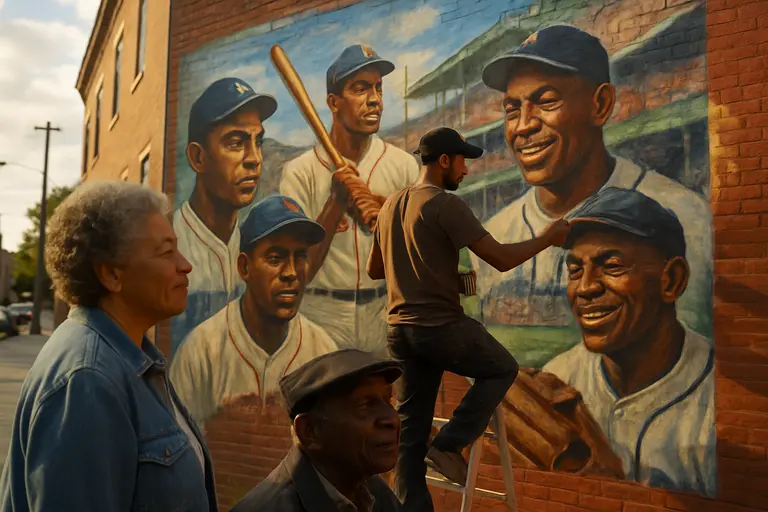
The Texas Almanac notes that the Great Depression caused severe economic strain for Black baseball in Texas, and that league structures struggled as teams folded or shifted into barnstorming, independent circuits, and amateur play. That context is central to understanding why a 2026 tribute night is not just nostalgic. It recognizes a baseball system that had to survive under financial pressure as well as racial exclusion.
Barnstorming also shaped the fan experience. Traveling clubs brought baseball to places that might not have supported a stable league schedule. For many communities, a visiting Black team could turn a local field into a civic gathering space for an afternoon or evening. That travel model kept competition moving even when formal league operations were hard to sustain.
For modern fans, this is where heritage preservation meets sports business history. Black teams needed gates, transportation, venues, and local promotion. They operated with practical demands familiar to anyone who follows minor league, college, or youth baseball in Texas: finding fields, drawing crowds, managing travel, and keeping players on the diamond. The difference is that they did it while facing barriers built into the era.
Integration And The Changing Baseball Pathway
The same Almanac account describes how integration beginning in 1947 changed the future for Black professional leagues, as top players began moving into Major League Baseball and integrated minor leagues. By 1949, Black professional leagues in Texas were largely unable to continue in the same form.
That shift deserves careful treatment. Integration opened long-denied opportunities for Black players, but it also weakened the institutions that Black communities had built around their own teams. The result was not a simple replacement of one system by another. It was a major change in baseball’s player pathway, fan culture, and local team identity.
The Rangers’ tribute night sits inside that history. It gives fans a chance to connect the modern major-league setting with the earlier teams that helped keep Black baseball alive in Texas. It also reminds youth players that development is never only about facilities and coaching. It is also about access, recognition, and the communities willing to support athletes before the wider sport gives them a stage.
What Texas Negro League Tribute Night Preserves
Texas Negro League Tribute Night preserves more than a set of names. It preserves a way of seeing Texas baseball as community history, not just professional entertainment. On September 16, 2026, the Rangers are scheduled to place that memory in front of fans at Globe Life Field through a home game, a theme night, and a Dallas Black Giants-inspired jersey.
The lasting value will depend on what fans do with the story after the game. A jersey can lead to a conversation with a grandparent. A team name can lead a student to a local archive. A tribute at a major-league park can encourage youth coaches to teach players that Texas baseball includes people who competed without equal access to recognition.
That is why this event matters for heritage preservation. It links the Rangers’ current home in Arlington with earlier Black teams whose city names still speak to Texas fans. It gives the past a date, a place, and a visible marker in the stands. Most of all, it helps keep a local baseball story in public view, where it belongs.