
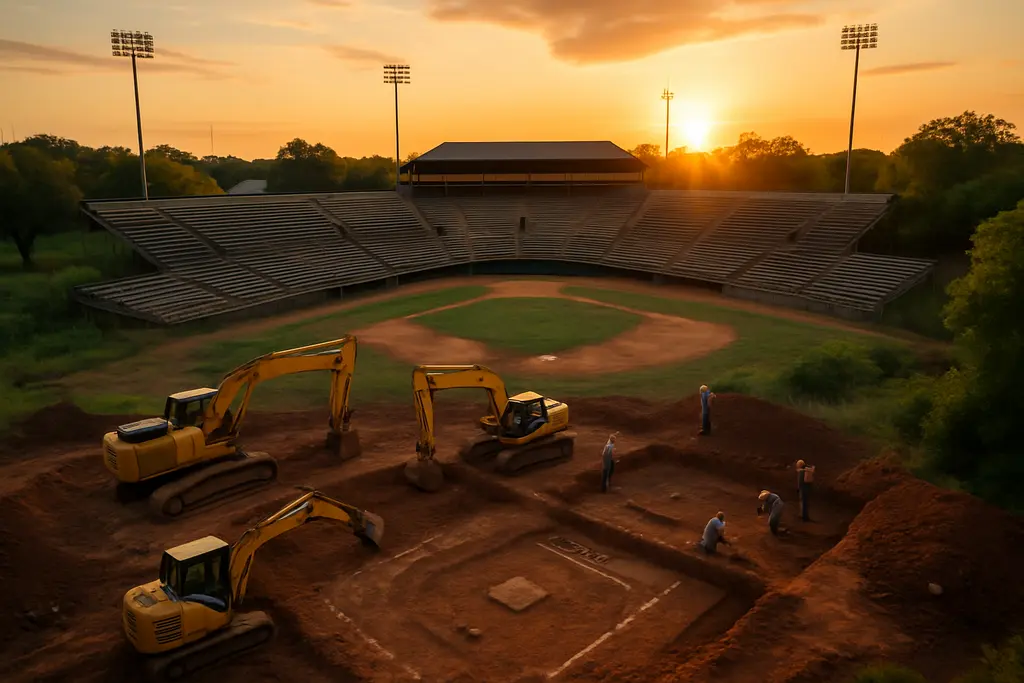

San Antonio baseball has never been just about nine innings, and Missions Stadium archaeology now gives the city a rare chance to connect a future ballpark with the ground beneath it. In 2025, SAISD’s Bond 2020 construction work around Fox Tech High School uncovered remnants tied to an 1800s limestone home, the San Pedro acequia, and parts of the Newton House in a parking lot connected to the planned 7,500-seat Missions stadium site, which is slated to open in April 2028, according to the SAISD Bond report.
For fans, that matters because the proposed ballpark is not being discussed on an empty patch of downtown. It sits near layers of civic memory: water systems, homes, campus growth, and now baseball planning. The Missions have long been part of San Antonio’s sports identity, and this new stadium discussion brings a wider question into view: how does a city make room for game-day energy while respecting what was already there?
Why Missions Stadium archaeology Matters Downtown
Missions Stadium archaeology Starts With Place
The finds around Fox Tech help explain why downtown construction in San Antonio often becomes a public history moment. The reported discoveries include the San Pedro acequia, a colonial-era irrigation canal system, along with parts of a historic limestone residence and the Newton House. Those details give the proposed stadium site a meaning beyond seating charts, concessions, and street access.
The acequia piece is especially powerful for local fans because water shaped early San Antonio settlement, farming, and daily life. Baseball crowds may one day enter a modern venue nearby, but the site’s deeper story reaches back to how people moved water, built homes, and formed neighborhoods. That is why Missions Stadium archaeology should be treated as part of the ballpark conversation, not as a side note.
A Ballpark Site With Older Neighbors
Stadium projects often focus on capacity, openings, parking, and development plans. Those details matter to families planning outings and to local businesses preparing for game-day traffic. Still, the Fox Tech discoveries remind San Antonio that a sports venue can sit beside evidence of earlier community life.
The limestone home remnant points to 19th-century residential use. The Newton House material connects the site with Colonel Samuel Galitzin Newton, whose dates are listed in the research as 1823–1874. The SAISD-reported discoveries do not answer every design question for the proposed stadium, and public material in the research does not confirm every preservation choice that may follow. What is clear is that the land has already spoken through the excavation process.
How Missions Stadium archaeology Fits City Review
San Antonio Has A Deep Archaeological Record
San Antonio’s Office of Historic Preservation has documented more than 2,300 archaeological sites in Bexar County, and the city’s archaeology program describes review expectations for projects in sensitive areas through its city archaeology review. That official context matters because the Fox Tech finds are part of a larger pattern across the city, not an isolated surprise.
For baseball people, the review process can feel far from the field. Yet it directly shapes how major civic projects are understood before construction changes a block. Reports, surveys, and mitigation steps are not box-checking exercises for a city with colonial, 19th-century, and earlier resources underfoot. They are how San Antonio decides what gets recorded, protected, studied, or interpreted before a new public destination takes shape.
What Fans Can Learn From The Process
Fans do not need to be archaeologists to care about this. If a future Missions game becomes part of a family’s summer rhythm, the walk to the ballpark can also become a lesson in place. Parents can talk with kids about how San Antonio grew around water, schools, homes, and public gathering spots before professional baseball entered the frame.
That kind of connection is valuable for a local sports culture. A ballpark is strongest when it reflects its city. For San Antonio, that means acknowledging Spanish colonial infrastructure, 19th-century home sites, public education roots at Fox Tech, and the continuing appeal of the Missions brand. Missions Stadium archaeology gives the club, the city, and residents a shared language for that connection.
Baseball, Memory, And Community Identity
The Missions Name Carries Public Weight
The San Antonio Missions name already carries historical meaning. That makes the archaeological discoveries near the proposed new stadium site more than a construction update. They sharpen the responsibility that comes with building baseball infrastructure in a city known for heritage tourism and neighborhood pride.
For many Texans, baseball is passed down through small rituals: scorecards, radio calls, caps worn by grandparents, postgame tacos, and drives across town with children in the back seat. Heritage works the same way. It becomes real when people can point to a place and say, “This happened here.” The Fox Tech discoveries give future ballpark conversations that same grounded quality.
Local Businesses And Game-Day Storytelling
The research does not provide confirmed details about future vendors, stadium tenants, or business programs tied to preservation. Even so, the cultural opportunity is easy to understand. If the stadium opens as planned in April 2028, nearby businesses and game-day operators will serve fans entering a district with a documented archaeological record. The story can shape walking routes, pregame conversations, school tie-ins, and public displays if officials and partners choose to present verified findings clearly.
That approach would fit San Antonio’s character. The city often asks sports to do more than entertain. Teams become gathering points after long workweeks, school events, youth league nights, and family reunions. A stadium beside archaeological finds can invite people to think about who lived, worked, studied, and built there before the first pitch.
What Preservation Adds To The Ballpark Conversation

Development And Respect Can Share Space
Preservation does not have to be framed as opposition to baseball. The stronger question is how development can carry memory with care. The Fox Tech discoveries show that the future Missions stadium site is part of a civic story already in motion. If public agencies, project leaders, and the community keep verified history visible, the ballpark discussion gains depth rather than delay for its own sake.
In practical terms, preservation can affect how a site is documented, how artifacts or features are treated, and how the public learns about what was found. The research supplied here does not state that the stadium design has changed because of the discoveries. Since that point is not confirmed in the provided official sources, it should remain an open question rather than a claim.
A Better Fan Experience Through Context
Fans remember places with a sense of story. A scoreboard can list runs and errors, but the surrounding district gives the day its emotional shape. If a family attends a Missions game in the future and learns that nearby ground held an acequia path or 19th-century building remains, the outing becomes part sport, part local memory.
That is the heart of Missions Stadium archaeology: it connects baseball planning with the shared duty to know the city beneath the concrete. San Antonio can celebrate a future home for the Missions while asking careful questions about the past. Those goals can stand together if the public record stays clear and the storytelling stays honest.
What Missions Stadium archaeology Means For Fans
For San Antonio baseball fans, the next meaningful step is not speculation. It is attention. The verified record already shows that 2025 work near Fox Tech uncovered historic structures tied to a site planned for a 7,500-seat ballpark opening in April 2028. The city also has an official archaeology program because Bexar County contains thousands of documented archaeological sites.
That combination makes Missions Stadium archaeology a local sports story with civic weight. It asks fans to see the proposed venue as more than a future address for home games. It is a meeting point for Texas baseball, downtown planning, school history, water history, and community memory. If San Antonio handles that story with care, the first pitch in a new ballpark will carry more than the promise of a fresh season. It will carry the voices of the ground itself.