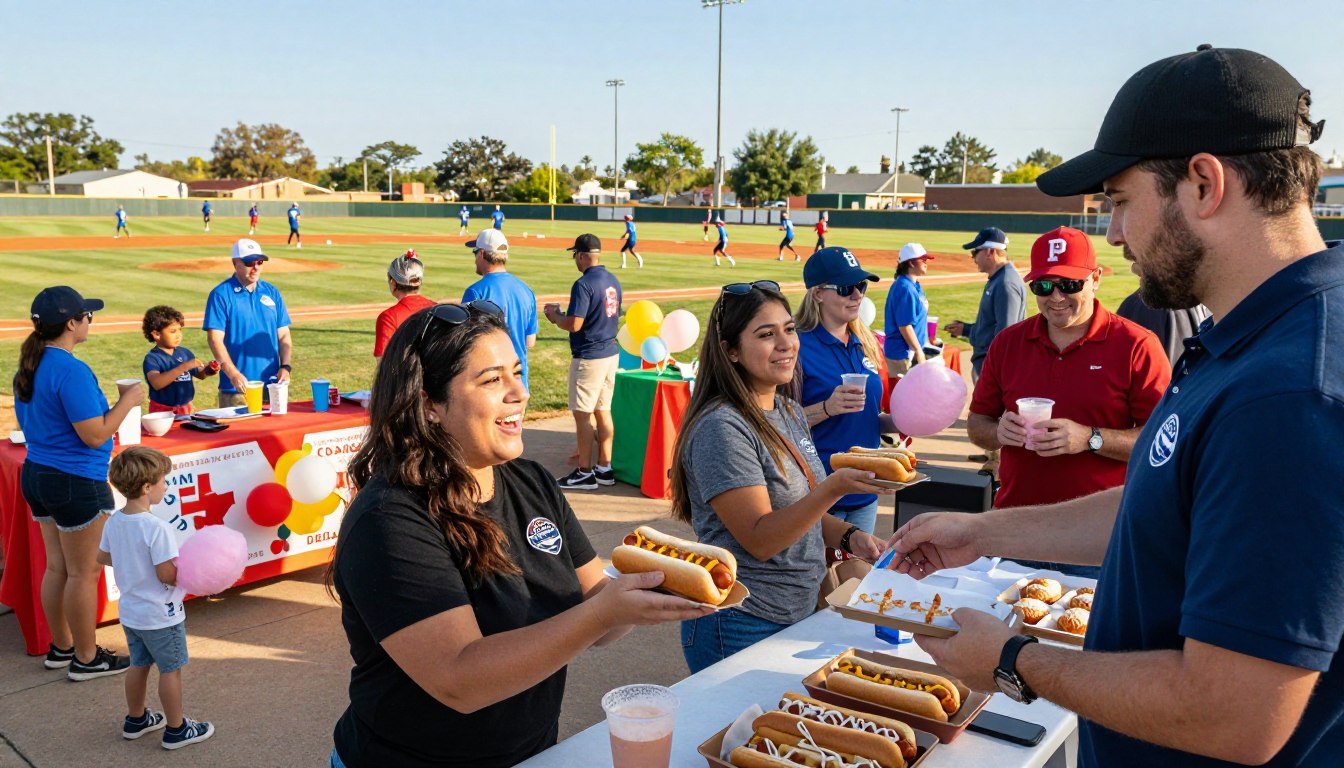

Every game day turns a stadium into a lively market. Concessions and merchandise vendors are key, helping local small businesses grow. They also create jobs for people in the area.
A 2022 survey by Project Play and Utah State University found something interesting. Parents of young athletes spend about $883 on their child’s sport each season. This shows how much money goes into sports, just like in professional venues.
On game days, buying food, drinks, and souvenirs helps the local economy. Each purchase helps small businesses do well. These jobs are not just for extra cash; they support families all year.
Looking at how much money is spent on youth sports and professional games, we see a link. Both support small businesses by tapping into sports excitement at all levels.
Case Studies: Pearl/SA Missions, East Downtown Houston, Arlington Entertainment District
Baseball has changed urban landscapes in Texas through ballpark districts. These districts show how sports can grow economies and bring people together.
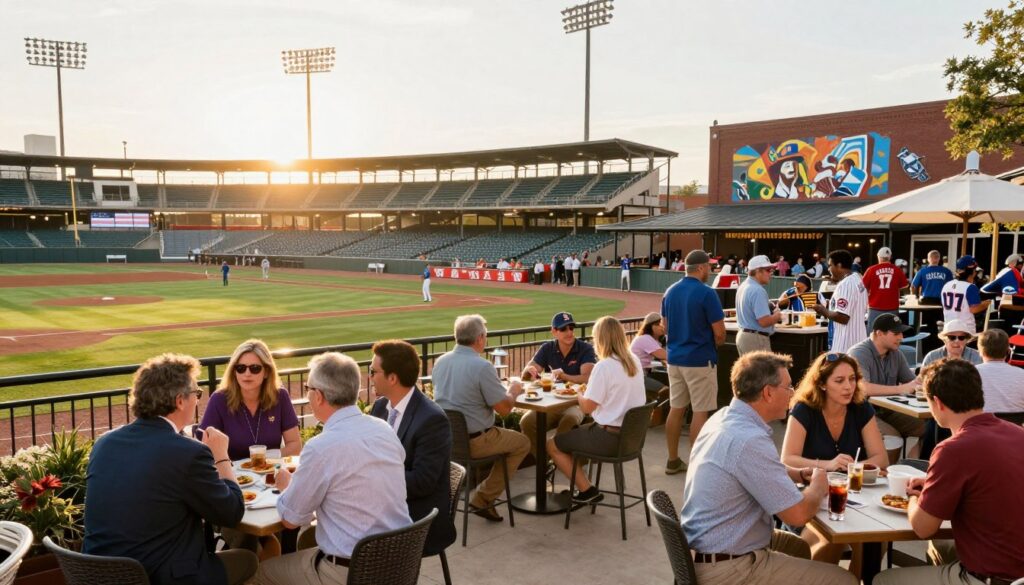
The Pearl Brewery and San Antonio Missions project is a great example. It turned an old brewery into a lively spot with a new ballpark. This mix of old and new brings people in all year, helping local shops and building community.
In East Downtown Houston (EaDo), sports have made a big difference. The Dynamo and Dash’s stadium turned an old industrial area into a bustling place. Now, there are homes and businesses, showing how sports can revitalize cities.
The Arlington Entertainment District is a top example of a sports and tourism hub. It has the Texas Rangers and Dallas Cowboys, making it a year-round attraction. This area shows how to make the most of sports events.
These examples show how partnerships, zoning, and investments can change areas. Today, ballpark districts aim to be economic drivers all year. They’re not just for games but for making money every day.
For more on baseball in Texas, read this article on sandlot baseball’s historic roots.
Measuring Spillovers (hotels, transit)
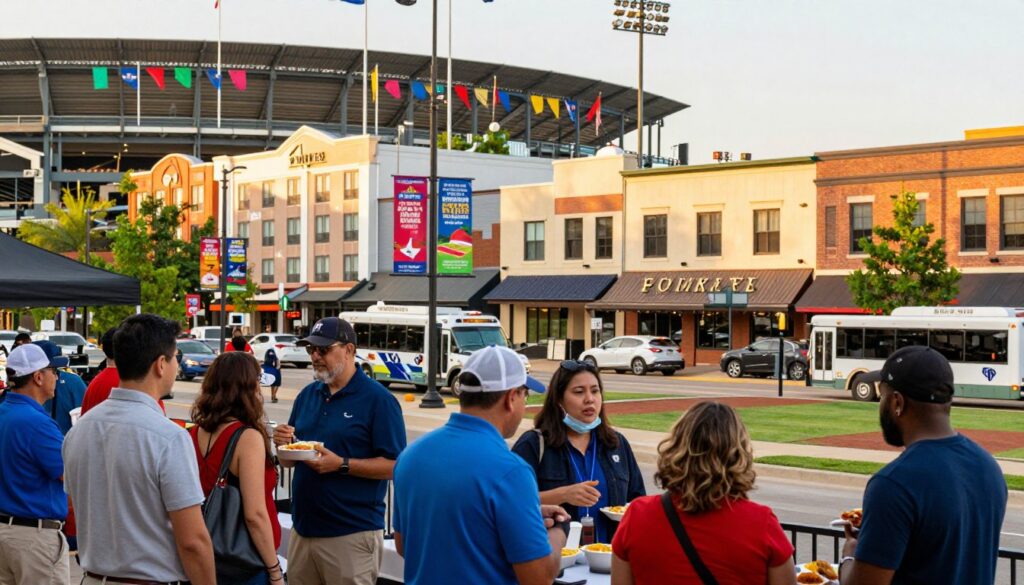
The economic impact of baseball goes beyond the stadium. It affects local hotels and transit systems. Understanding these spillover effects shows how baseball boosts tourism.
Project Play data shows travel costs in youth sports are high. Parents spend $260 a year per sport, per child. For elite teams, costs can reach thousands. This highlights the economic pull of sports tourism, like during baseball tournaments.
Economists use different methods to measure these impacts. They look at hotel occupancy, average daily rates, and revenue per available room. This helps show how baseball can boost local hotels.
The impact also reaches transit systems. By studying ridership on game days, analysts can see the economic benefits. Each fan’s spending on hotels, taxis, and food adds to the local economy.
The real economic impact of a team is more than just ticket sales. It’s about improving a city’s service infrastructure. Baseball’s role in tourism is clear, driving demand in hospitality and transportation. For more on event economic impacts, check out the Bay Area Super Bowl 2026 economic.
Seasonality and Event Layering
Baseball’s seasonal nature poses challenges for local economies. With fewer games in the off-season, revenue can drop. To fight this, modern ballpark districts use event layering.
This strategy lets venues host various activities all year. From concerts to youth baseball tournaments, there’s always something happening. A 2018 survey by the Aspen Institute and the University of Texas showed a trend in youth sports. Young athletes play year-round, needing facilities constantly.
This mirrors the approach of professional ballparks. They aim to keep tourism and support small businesses strong. For instance, the Arlington Entertainment District turns a baseball stadium into a holiday market or hosts college football events. This keeps the area lively, helping local bars, restaurants, and shops stay busy.
The success of these venues depends on their ability to adapt and innovate. By linking youth sports with professional ambitions, communities boost their economy. This not only helps small businesses but also makes the area attractive for tourists and locals. To learn more about baseball’s history in Texas, visit this resource.