

The history of female athletes is rich and complex, focusing on sports like baseball and softball. In the early 20th century, female teams started to appear, drawing fans everywhere. These teams were more than just competitors; they mixed sports with entertainment, creating a special show.
Virne Beatrice “Jackie” Mitchell Gilbert is a standout from this time. At 17, she made big news by striking out Babe Ruth and Lou Gehrig in 1931. But, her win was forgotten when baseball commissioner Kenesaw Mountain Landis canceled her contract. He said baseball was too tough for women.
Even so, women kept baseball alive during World War II. But, they faced many barriers, like a ban on female players that lasted until 1993. This part looks at how early media views shaped public opinion. It often focused on the newness of women in sports, not their skills. These views greatly affected softball’s history.
AAGPBL Connections & Texas Players
The All-American Girls Professional Baseball League (AAGPBL) has left a lasting mark on women’s baseball in Texas. From 1943 to 1954, it showcased talented women who broke barriers in baseball. Many Texas players shone in this league, making a big impact in a sport dominated by men.
Several Texas-born players made significant contributions to the league. Their stories inspire today’s female athletes. The Eastern Women’s Baseball Conference, now in its 27th season, is a testament to this legacy. It welcomes players aged 14 to 69, with teams like the Montgomery County Barncats and Baltimore Blues.
The AAGPBL’s legacy is also seen in the MLB’s Trailblazer Series. Started in 2017, it aims to grow interest in girls’ baseball. Coaches like Justine Siegal and Codi Dudley mentor young athletes, carrying on the AAGPBL’s mission.
Mo’Ne Davis’s performance in the 2014 Little League World Series was a turning point. It inspired a new wave of female players. Programs like the DC Force are now nurturing this talent, keeping women’s baseball in Texas alive.
| Year | Event | Impact on Women’s Baseball |
|---|---|---|
| 1943-1954 | AAGPBL Operations | Established a platform for women athletes |
| 2017 | MLB Trailblazer Series | Increased visibility and opportunities for girls |
| 2014 | Mo’Ne Davis at Little League | Ignited interest in girls’ baseball |
Looking back, it’s clear the AAGPBL’s legacy inspires women’s baseball in Texas today. Leagues and programs keep this legacy alive, ensuring women’s baseball remains vibrant and influential.

Title IX and Fastpitch Explosion
The passage of Title IX in 1972 was a big moment for women’s sports. This law made sure schools couldn’t discriminate based on sex. As a result, the number of girls playing sports went up by more than 1,000 percent in the U.S. This growth gave millions of women a chance to play sports, but there’s a long way to go in coaching and leadership.
Even today, less than half of women’s college teams have female coaches. Only 3 percent of men’s teams have a female head coach. Dr. Courtney Cox from the University of Oregon says women have been fighting for these opportunities for a long time. They are now seeing the fruits of their labor.
While Title IX helped more women play sports, it also changed diamond sports. Colleges quickly added softball to meet Title IX rules. This move pushed talented female baseball players to fastpitch as their main sport.
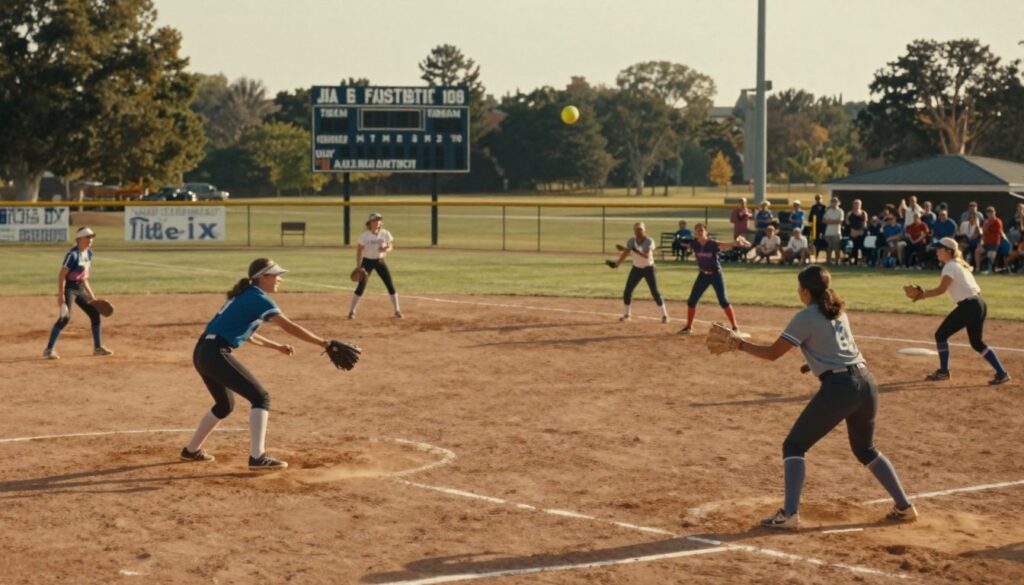
NCAA softball has grown a lot. The Women’s College World Series is now a big TV event, showing off female athletes’ skills. Professional fastpitch leagues also offer top-level competition for women who might have gone into baseball.
Sarah Hudek made history as the first female baseball scholarship player in 2015. She played at Bossier Parish Community College and then at Texas A&M, switching to softball. Her story shows the challenges women face in baseball, where softball is often preferred.
Now, there are efforts to start varsity women’s baseball programs at colleges. These programs aim to give more chances to talented female athletes. They want to make sure women have options in diamond sports.
In summary, Title IX has greatly impacted women’s sports, increasing participation and opportunities. But it has also influenced women’s sports paths in ongoing ways. It’s important to keep working towards fairness and more choices for female athletes in softball and baseball.
Coaches, Umpires, and Executives Leading Today
The world of professional baseball is changing, thanks to women in coaching and executive roles. Justine Siegal was a trailblazer, becoming the first paid female coach in men’s professional baseball with the Brockton Rox in 2009. She didn’t stop there; she threw batting practice for the Cleveland Indians in 2011 and joined the Oakland Athletics in 2015.
Rachel Balkovec also made history as the first female hitting coach for the New York Yankees in 2019. She used the name “Rae” on her résumés to hide her gender, after facing many rejections despite her great qualifications.
Kim Ng was appointed as the General Manager of the Miami Marlins in 2020. This made her the highest-ranking female executive in baseball history. Alyssa Nakken became the first woman to hold a full-time coaching position in MLB with the San Francisco Giants.
Sarah Thomas became the first woman to officiate a Super Bowl in 2021. Bianca Smith was hired by the Boston Red Sox as the first full-time minor-league Black female coach in 2021.
In just 18 months, over 30 women got full-time coaching jobs in MLB, NBA, and NFL. This shows a big change in sports. These stories inspire women in women’s baseball Texas to dream big about their careers.
For more on women’s roles in baseball, visit Texas Baseball Champions.
Archiving Women’s Stories
Documenting women’s baseball history is very important. Groups like Justine Siegal’s Baseball for All are leading the way. They support 40 girls’ teams, inspiring future players.
The Eastern Women’s Baseball Conference is a key part of this effort. It has been around for 27 seasons, welcoming players from 14 to 69. This community keeps the history alive, inspiring young girls.
Events like the Trailblazer Series are vital. They bring together 100 young female players in Compton, California. It’s a chance for girls to see themselves in their teammates and coaches. This is very important for those who often feel alone on their teams.
Oral history projects and digital archives are key. They keep the stories of AAGPBL veterans and female pioneers alive. This ensures their achievements are remembered. It’s important for understanding women’s baseball in Texas and beyond.
We must keep celebrating these achievements. We need to keep fighting for women’s baseball to be recognized. Telling these stories empowers future generations to chase their baseball dreams.