
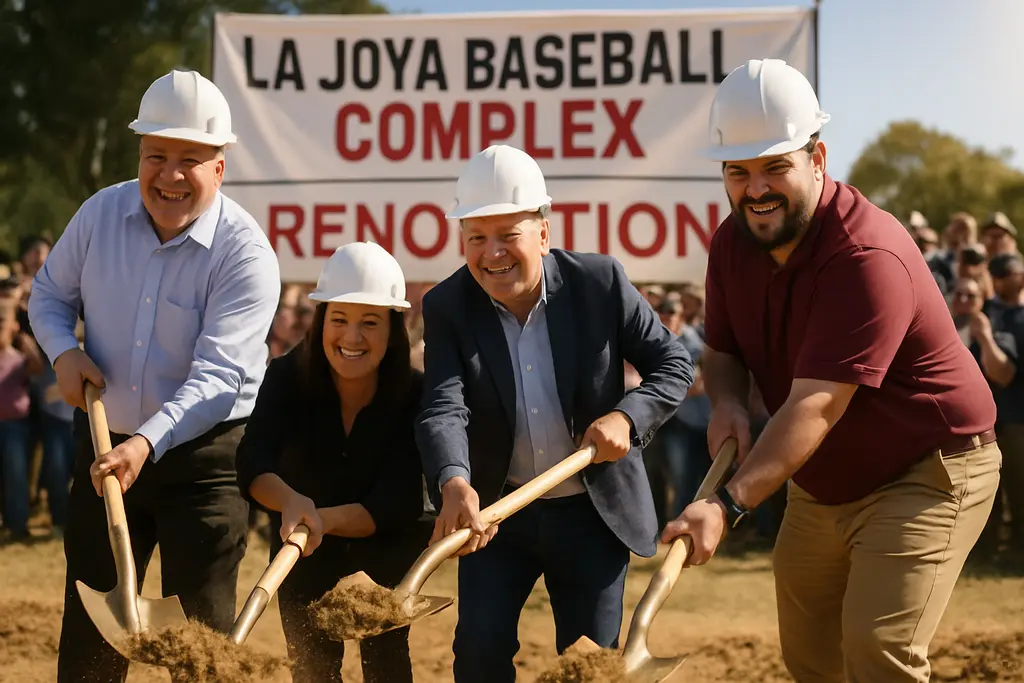

The La Joya Baseball story added a major facilities chapter on September 17, 2026, when La Joya ISD held a groundbreaking ceremony for the nearly $3 million transformation of the Leo Garza, Jr. Baseball Complex in La Joya, Texas, according to the district’s official groundbreaking announcement. For a school district where baseball ties together campus pride, family routines, and student development, this was more than a construction update. It marked a public commitment to giving young athletes a shared place that matches the work they put in before school, after school, and during district competition.
The project centers on a facility that serves La Joya High School, Palmview High School, and Juarez-Lincoln High School. That shared use matters. A high school baseball complex is not only a field. It is a classroom for discipline, a gathering place for families, and a stage where players represent their schools in front of classmates, coaches, and neighbors. In a Texas baseball culture built through local diamonds and Friday-night family calendars, the decision to invest district funds into this complex says something clear about priorities.
Groundbreaking Sets The La Joya Baseball Plan
September Ceremony Put The Project In Motion
The groundbreaking on September 17, 2026, gave the project a public starting point. La Joya ISD described the work as a nearly $3 million transformation of the Leo Garza, Jr. Baseball Complex. Since the ceremony already took place, the story now shifts from announcement to execution. As of October 13, 2026, the district’s published timeline pointed to completion by December 2026, which would place the improvements ahead of the next district baseball season if that schedule is met.
That timing gives coaches, players, and families a clear marker. Fall facility work can shape winter preparation, preseason routines, and early team identity. The official information does not list a full construction calendar or daily closure details, so any claims beyond the district’s stated completion target would be guesswork. What is verified is the scale of the investment, the public groundbreaking date, and the district’s stated aim to improve the competition and training environment for its baseball programs.
La Joya Baseball Funding And Timing
Funding for the project is coming entirely from La Joya ISD district funds, not state or federal grants, and the district has listed synthetic field turf, expanded dugouts, new fencing, and upgraded batting cage netting among the improvements in its project details. For La Joya Baseball, the funding choice is part of the story because it places responsibility and ownership inside the district. This is local money being used for a local athletic facility that serves three high school programs.
That also connects the project to La Joya ISD’s Achieving Excellence Together: 2030 Strategic Plan. The district linked the work to Priority 3, Thriving Students, and Priority 5, Operational Excellence & Financial Stability. In plain baseball terms, the district is trying to make one shared venue work harder for more students while improving the daily conditions around practice and competition.
What The Upgrades Mean For Student-Athletes
Playing Surface And Dugout Changes
The move to synthetic field turf is one of the most visible pieces of the project. The district described the turf as a way to provide a consistent playing surface. For players, consistency matters because the field is where footwork, reads, throws, baserunning, and defensive habits are repeated until they become part of game performance. The official source does not claim injury reduction or list maintenance savings, so those points should not be assumed. The supported point is direct: La Joya ISD expects the new surface to improve consistency for competition and training.
Expanded dugouts are another practical change with a cultural effect. Dugouts hold the rhythm of a baseball team. They are where players talk through at-bats, where coaches make quick teaching points, and where younger athletes learn how to carry themselves during a game. Bigger dugouts do not win innings by themselves, but they can support a better team environment. For La Joya Baseball, that means the renovation touches the spaces athletes use between pitches as much as the spaces fans see from the stands.
Batting Cages And Daily Development
Upgraded batting cage netting speaks to the part of baseball that happens away from the main scoreboard. Hitting work is repetitive. Players need safe, reliable practice spaces to take swings, work through timing, and build confidence before district play. The district identified the batting cage improvements as part of the project, and that detail is especially meaningful for student-athletes who develop through daily reps rather than single showcase moments.
Joe Peña, La Joya ISD’s Executive Director of Athletics, described the project as an investment in student-athletes across the district and said it would create a “quality environment where they can compete, develop and represent their schools with pride.” That phrase fits the scale of the work. This is not a single-team upgrade. It is a shared athletic investment aimed at students from multiple campuses who will use the same field as competitors, teammates, and representatives of their schools.
Three Schools, One Shared Baseball Home

La Joya High, Palmview, And Juarez-Lincoln
The facility will serve as the shared competition venue for three comprehensive high school baseball programs: La Joya High School, Palmview High School, and Juarez-Lincoln High School. That structure gives the project district-wide reach. Instead of one campus receiving a standalone improvement, the Leo Garza, Jr. Baseball Complex becomes a common stage for athletes from across La Joya ISD.
The La Joya Baseball project also creates a practical link between campuses. Players may wear different school colors, but they will prepare for key games in the same venue, under the same facility standards, and in front of many of the same local families. That shared setting can deepen rivalries while keeping them grounded in district identity. Texas high school baseball often works this way: the competition is real, but the community ties are close enough that parents, former players, and younger athletes know the names on both sides.
Community Memory Around Leo Garza, Jr. Field
Guadalupe “Wally” Barrera, head coach of La Joya High School’s baseball program, called the project significant for the community and described Leo Garza, Jr. field as “home to so many memories” and generations of Coyote Baseball. That statement gives the renovation its emotional weight. A field with years of games behind it carries more than worn dirt or old fencing. It carries senior nights, playoff hopes, first varsity starts, and families who planned spring weeks around first pitch.
The district’s decision to invest in the complex keeps that memory connected to the future instead of leaving it in the past. Current athletes get new tools. Future athletes inherit a facility shaped by the same community that filled the old one with memories. The official materials do not name every former player or list past records, so the safe reading is cultural rather than statistical: La Joya ISD is treating this baseball venue as a shared civic asset for student life.
Why The Leo Garza, Jr. Project Matters In La Joya
A Facility Investment With A Community Reach
For La Joya Baseball families, the nearly $3 million revamp is a sign that high school sports remain part of how the community supports young people. Student-athletes need coaches, classrooms, transportation, and practice time. They also need facilities that tell them their work is valued. The Leo Garza, Jr. Baseball Complex project brings that message into a physical space where players can train, compete, and grow under district programs.
The cultural impact is not only about the athletes on varsity rosters. Younger students see where the older players compete. Families gather around the same venue over multiple seasons. Coaches build routines that last beyond a single class. Local pride often forms through repeated moments like these, where a district facility becomes a meeting point for school identity.
What The District Has Made Clear
La Joya ISD has made several points clear through its official releases: the groundbreaking happened on September 17, 2026; the project is nearly $3 million; funding is from district funds; the work includes turf, dugouts, fencing, and batting cage netting; the venue serves La Joya High School, Palmview High School, and Juarez-Lincoln High School; and completion is expected by December 2026. Those facts are enough to show why the project matters without adding claims that have not been verified.
In Texas, baseball facilities often become part of a town’s weekly rhythm. The Leo Garza, Jr. Baseball Complex is now positioned to carry that role for another generation of La Joya ISD athletes. The work is still tied to a December 2026 completion target, but the public message has already landed: this district sees baseball as a place where student development, campus pride, and community memory meet on the same field.