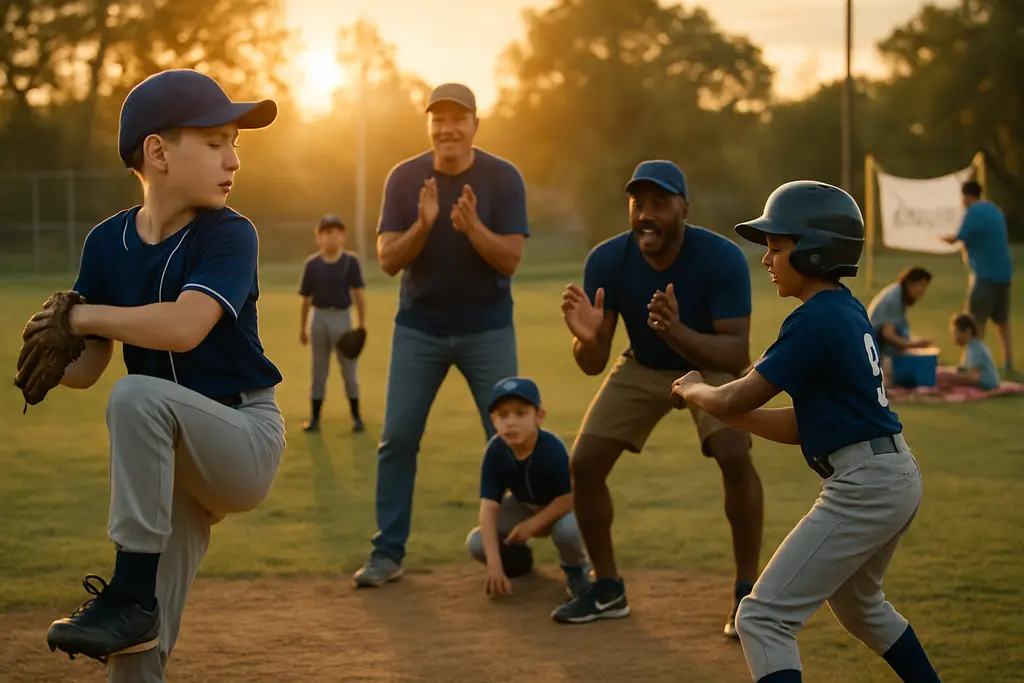

Across small towns and city neighborhoods, youth baseball Texas programs often depend on more than coaches, parents, and players. They need light bills paid, fields repaired, uniforms ordered, tournament visitors fed, and local trust built season after season. That is where local businesses become part of the baseball story, not as background sponsors, but as everyday partners in access.
Texas baseball culture has always lived close to civic life. A youth field is rarely just dirt, grass, bases, and a backstop. It is a place where grandparents claim the same bleacher row, where a local restaurant feeds teams after bracket play, and where a hardware store might donate supplies after a storm. The verified examples from Ingram and Texarkana show two sides of the same truth: baseball support can arrive through major foundation dollars, city-backed facilities, tournament travel, and the small-business activity that follows.
The most useful way to read these stories is sports-first. Better fields change practice habits. Safer facilities help families feel welcome. Tournaments put pressure on parking, concessions, hotels, restaurants, and staffing. For Texas communities, youth baseball is both a player-development system and a civic gathering point.
Why Youth Baseball Texas Needs Local Backing
Youth Baseball Texas Starts With Access
For youth baseball Texas families, access can be decided by simple things: whether the field is playable after rain, whether batting cages are available, whether a league can afford equipment, and whether families can travel without being priced out. Those are not abstract concerns. They shape who gets to keep playing after the early years, who gets extra reps, and who feels invited into the sport.
Local business support often meets the sport at those pressure points. A sponsor may pay for uniforms, a contractor may help repair fencing, a restaurant may host a fundraiser, or a business group may back a facility project that brings weekend visitors into town. The effect is not only financial. It tells young players that their town sees baseball as worth supporting.
Business Support Shows Up Beyond The Fence
Many people picture baseball sponsorship as a banner on an outfield wall. That still matters, but the deeper impact is seen beyond the fence. Local businesses help create the conditions around a league: meals after games, hotel rooms for tournaments, part-time work tied to events, donated supplies, and civic pressure to maintain public fields.
That support also carries cultural weight. In many Texas towns, youth baseball weekends are family rituals. Parents coordinate rides, siblings chase foul balls, and local shops see familiar jerseys walk through the door. The sport becomes a shared calendar, and businesses that support it become part of the memory bank.
Astros Relief Work In Ingram
Fields As Recovery Infrastructure
One of the clearest recent examples came after flooding affected parts of Texas Hill Country. On September 20, 2025, the Houston Astros and the Astros Foundation pledged $2.5 million to build three new youth baseball and softball fields, two practice fields, batting cages, and related amenities in Ingram, Texas, with a stated goal of having the facilities ready by spring 2026 Astros field donation. Since that target date had passed by September 24, 2026, the careful reading is that the pledge and target are confirmed by the announcement, while current completion status should be confirmed through local project updates.
The sports meaning is plain. After a disaster, ballfields can help restore routine. Practice times, league schedules, and weekend games give families a reason to gather again. For young players, returning to baseball can mark a return to normal life, even if rebuilding continues around them.
What Local Sponsors Can Learn
The Ingram pledge also shows why large baseball brands and local partners can serve different needs. A major foundation can fund big construction. Local businesses can help sustain the day-to-day use that follows: team meals, scoreboard needs, volunteer events, clinic support, and field-care supplies.
That mix matters because a new field is only the start. A facility needs upkeep, scheduling, coaching energy, and community use. Texas businesses that want to help youth sports do not always need to fund a full complex. They can support a piece of the baseball routine, then stay present long enough for families to feel the difference.
Texarkana Shows The Small-Business Link
Tournament Weekends And Local Income
Texarkana offers another view of how baseball facilities connect to local commerce. The City of Texarkana, Texas reported that the $9.4 million Swanger Sports Complex officially opened on May 2, 2025, and was projected to attract more than 30,000 visitors annually, with an expected yearly economic impact of $5.8 million Texarkana city newsletter. The same city newsletter reported that the complex supported 49 local jobs and generated more than $188,000 in small-business income.
Those numbers show why youth tournaments matter to more than the teams on the bracket. A weekend schedule can send families to restaurants, gas stations, grocery stores, hotels, sporting goods shops, and entertainment spots between games. In a Texas baseball town, the field can become a front door for visitors who might not otherwise stop.
This is the same facility-first pattern seen in other Texas communities, where tournament weekends shape civic planning and local spending; our related story on the youth baseball economy looks at how those forces play out across the state.
Jobs Around The Ballpark Calendar
The Texarkana example also reminds us that youth baseball work is not limited to coaching. Field crews, concession workers, event staff, hospitality employees, and nearby small businesses all feel the schedule. A full tournament calendar can create recurring work, especially in communities that build their spring and summer weekends around youth sports travel.
For local leaders, the key is balance. A sports complex can bring visitors and spending, but families still judge the experience by basics: field quality, restrooms, shade, parking, clear schedules, and fair access. Businesses that support those practical needs help make the venue feel like part of the community rather than a stand-alone project.
How Businesses Can Support The Next Team

Practical Support Without Empty Promises
Local businesses do not need to guess at what baseball families need. The needs are visible every week. Teams need safe practice space, working lights, usable batting areas, uniforms, catcher’s gear, field chalk, water access, and tournament volunteers. A business can choose one lane and do it well.
- Sponsor equipment for a league that serves new players.
- Fund field repairs or materials after weather damage.
- Host team meals or fundraiser nights tied to a clear baseball need.
- Support clinics that give younger players more instruction.
- Help cover tournament operations, including concessions or staffing.
The strongest partnerships are specific. A vague donation can disappear into general costs. A clear commitment, such as batting-cage netting or uniforms for a division, gives families a visible result and gives the business a real connection to the season.
A Community Standard For Baseball Giving
Good support should also protect dignity. Not every family can pay the same fees or buy the same gear. Businesses that help close those gaps should do it in ways that keep young players focused on playing, not on who needed help. That means working through leagues, schools, city parks departments, or trusted nonprofits whenever possible.
Texas baseball has room for both big checks and small acts. A major field project can change a town’s sports calendar. A local shop paying for a team’s practice shirts can make a first-time player feel like they belong. Both forms of support matter because both keep kids closer to the game.
Why Local Business Support Matters For Youth Baseball Texas
The future of youth baseball Texas programs will be shaped by whether communities treat fields as shared civic spaces. Ingram showed how baseball investment can fit into recovery after flooding. Texarkana showed how a sports complex can connect tournaments, visitors, jobs, and small-business income. Together, those examples make a simple case: youth baseball thrives when the town around it takes part.
That is the work youth baseball Texas supporters can keep building. Local businesses can help lower barriers, improve facilities, back volunteers, and make tournament weekends feel welcoming. For young players, the payoff is measured in reps, friendships, confidence, and a place to play. For Texas communities, it is measured in shared Saturdays, full parking lots, and the steady sound of baseball carrying across town.