
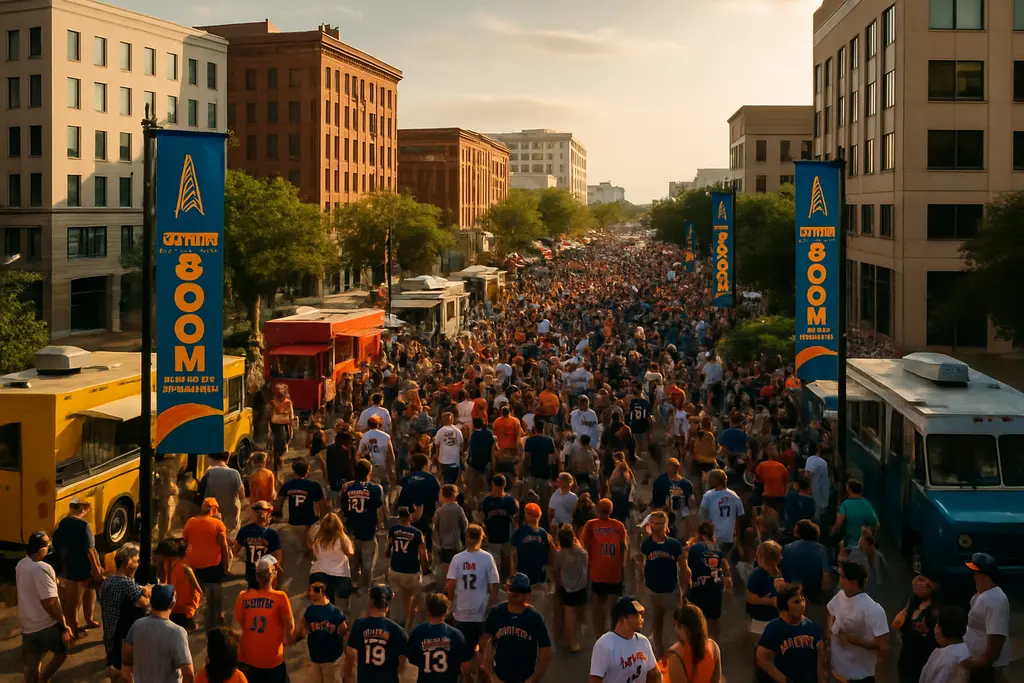

The Spindletop Boom Tournament gave Beaumont a clear baseball-driven lift on March 28-29, 2026. The youth baseball event drew 131 teams, including 52 from outside the Beaumont area, and produced an estimated direct economic impact of about $202,800 for the city, according to Yahoo Sports. For local families, coaches, hotel operators, restaurant staffs, and tournament workers, those numbers reflected more than a weekend schedule. They showed how youth baseball can turn field space, family travel, and regional competition into measurable local activity.
Beaumont has long understood that sports weekends work differently from one-night entertainment. A tournament brings players, parents, siblings, coaches, umpires, and volunteers into a shared rhythm: early meals, afternoon breaks, supply runs, gas stops, and postgame dinners. That pattern matters in a city where baseball and softball tournaments fit into a broader event economy. The tournament’s impact was not presented as a guess about future spending; it was tied to a concluded March 2026 event and a reported direct impact figure.
How The Spindletop Boom Tournament Moved Money
Spindletop Boom Tournament Team Counts
The first part of the story is scale. A 131-team field creates repeat spending because youth baseball travel is built around groups. One roster may bring several cars. One out-of-town team may book multiple rooms. One morning game can send dozens of people to breakfast before returning to the park. The reported 52 out-of-town teams were especially meaningful because visiting teams tend to add lodging and travel-related spending to the local economy.
The Spindletop Boom Tournament also showed the value of tournament density. Rather than a single showcase game, Beaumont hosted a format that spread activity across two days. That kind of weekend structure can help restaurants, hotels, convenience stores, and service workers because spending is not limited to a single gate time. Families often plan around bracket timing, weather, field assignments, and recovery time for players, which can stretch their local spending across the day.
What Direct Impact Means Locally
The reported $202,800 direct economic impact is best read as spending connected to the event itself, not as a full measure of every possible follow-on effect. Direct impact points to dollars spent because teams and families were in town for the tournament. That can include lodging, food, retail, transportation, and other visitor needs when those categories are counted by event organizers or tourism officials.
For Beaumont baseball families, the number helps explain why tournament operations receive attention beyond the foul lines. Field scheduling, parking flow, hotel availability, and clear communication all affect whether visitors stay longer, spend locally, and leave with a positive view of the city. For local businesses, a youth tournament weekend can mean extra staffing decisions, earlier breakfast service, more grab-and-go demand, and family-friendly dinner traffic after games ended.
Beaumont Sports Tourism And Baseball Weekends
A City Strategy Built Around Events
The March 2026 tournament fit within Beaumont’s larger sports-tourism push. In the city’s fiscal year 2024 reporting, Beaumont visitor spending reached $363.5 million, supporting 3,190 tourism-related jobs and generating $31.3 million in local tax revenue, according to the city’s annual report. That context matters because a baseball tournament is one piece of a wider visitor economy, not a stand-alone success story floating outside city planning.
The same city report said the Beaumont Convention and Visitors Bureau hosted more than 200 teams across baseball and softball tournaments in 2024. That past activity helps explain why a March 2026 baseball event could land with local significance. Beaumont already had experience bringing diamond-sports teams into town, and the Spindletop Boom Tournament added another example of youth baseball supporting the city’s event calendar.
Sports tourism also has a practical advantage for a community such as Beaumont: families are usually traveling with purpose. They are not simply passing through. They arrive because a schedule tells them where to be and when to be there. If the event is managed well, that schedule can create predictable demand for hotel rooms, meals, fuel, groceries, athletic supplies, and downtime activities between games.
Why Baseball Fits Beaumont’s Visitor Economy
Baseball tournaments bring a type of visitor spending that often reaches many parts of a city. Parents may need sunscreen, ice, water, laundry supplies, replacement gear, or a late meal after bracket play. Younger siblings may need activities during long breaks. Coaches may meet with parents between games. Umpires, field crews, and tournament staff also help create a local work pattern around the event.
That local spread is why baseball weekends can resonate with Beaumont beyond the scoreboard. They create a shared public scene: uniforms in hotel lobbies, team meals at local restaurants, and families asking about fields, traffic, and places to eat. For residents, those signs make sports tourism visible. For business owners, they represent a weekend audience that has already chosen Beaumont as its base.
Local Business Effects From Tournament Travel
Hotels, Restaurants, And Short-Stay Demand
The clearest local business connection sits with lodging. Out-of-town teams generally need places to stay, and a two-day event can produce room demand across Friday and Saturday patterns depending on travel distance and early game times. While the available research does not provide a sector-by-sector breakdown for the March 28-29 event, Beaumont’s tourism reporting supports the broader point that visitor spending and local tax revenue are tied to event activity.
Restaurants also feel the baseball calendar in specific ways. Tournament families often seek meals that are quick, affordable, and easy for groups. Breakfast traffic may come before first pitch. Lunch may be shaped by bracket gaps. Dinner can arrive in waves after elimination games or late finishes. For Beaumont, that means the economic value of the Spindletop Boom Tournament likely touched more than one type of business, even though the verified public figure remains the reported direct impact total.
Retail, Fuel, And Services Around The Fields
Youth baseball travel also supports small purchases that can be easy to miss in a single headline number. Families buy drinks, snacks, tape, towels, chairs, and fuel. Players may need batting gloves or basic supplies. Vehicles move between hotels, fields, restaurants, and stores. Each trip can add a small piece to the local total.
Service work matters as well. Hotels need front-desk coverage and housekeeping. Restaurants need kitchen and floor staff. Tournament sites need game-day operations. The city’s fiscal year 2024 visitor data, which connected tourism to 3,190 jobs, helps frame why local leaders track these events. A baseball weekend can be short, but it plugs into employment patterns that are active across the city’s hospitality and event sectors.
Community Meaning Beyond The Box Score

Youth Baseball As A Shared Local Stage
Economic impact is only part of the tournament’s value. Youth baseball weekends also give local players a sense of place. Teams from around the region came into Beaumont, and local athletes had a chance to compete in front of family members without leaving home. That matters for player development because regular tournament play helps young athletes handle back-to-back games, changing opponents, field conditions, and the mental pace of bracket competition.
For parents and coaches, a tournament in Beaumont can reduce travel strain for local teams while still creating a regional test. For visiting families, the city becomes part of the baseball memory: the fields, the meals, the hotel stay, and the time spent between games. That is how sports events become part of local identity. The scoreboard records winners and losers, but the weekend also records how a city hosts.
How Media Framing Shapes Fan Memory
The way a tournament is covered affects how residents understand its value. A short recap can make the weekend sound like a simple youth sports listing. A spending figure gives the story civic weight. Team counts show scale. Out-of-town participation shows reach. Taken together, those facts help Beaumont residents see why diamond-sports events are part of the local sports economy.
The Spindletop Boom Tournament also carried a name tied to Beaumont’s identity. Spindletop is part of the city’s public memory, and using that name for a baseball event connects sport, place, and local storytelling. The research provided does not state how the tournament name was chosen, so that point should be read as cultural context rather than an organizer claim. Still, names matter in sports. They help a tournament feel rooted rather than interchangeable.
What The Spindletop Boom Tournament Means For Beaumont
The Spindletop Boom Tournament mattered because it gave Beaumont a finished, measurable example of youth baseball’s local value. On March 28-29, 2026, the city hosted 131 teams, drew 52 from outside the area, and generated an estimated $202,800 in direct economic impact. Those facts stand on their own, but they also fit a larger pattern: Beaumont has used sports and tournaments as part of its visitor economy, and baseball remains a natural fit for family travel in Southeast Texas.
For local fans, the lesson is straightforward. A youth baseball tournament is not only about who advanced through a bracket. It is also about hotel rooms booked, restaurants serving teams, parents learning the city, young athletes competing close to home, and businesses seeing weekend traffic tied to the game. Beaumont’s baseball story is built in those details, one tournament weekend at a time.