
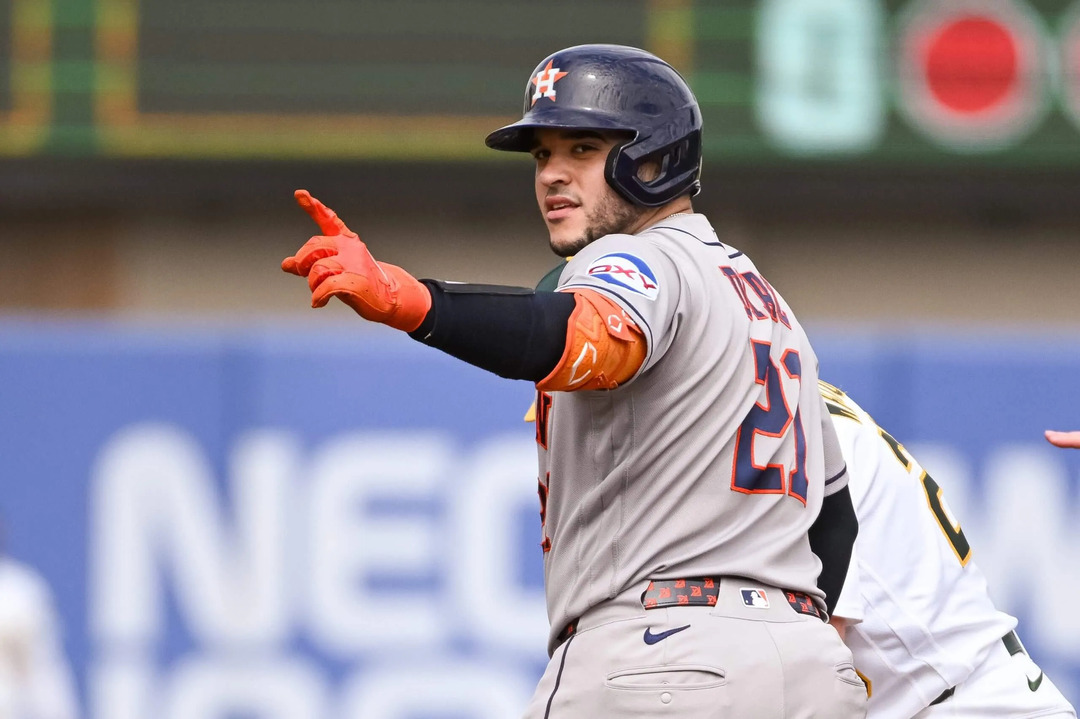

The Houston Astros won the 2026 American League West at 81–81. The Texas Rangers finished one game behind them at 80–82. Neither team had a positive run differential. Houston still got a division title; Texas got an early offseason. For anyone evaluating MLB futures betting, that strange finish offers a more useful lesson than simply deciding which team disappointed more.
For Texas readers interested in the wagering side beyond the baseball analysis, a separate guide to how to bet on baseball in Texas covers the available market and access questions. The distinction matters here because this is not an argument for a particular sportsbook or bet. It is about how to evaluate a season-long market without confusing a famous roster, a recent championship or a good month with the probability of actually winning a division.
The trap in the AL West was not that the market somehow concealed what was happening. It was simpler: a division future looks like a bet on one team, but it is really a bet on the relationship between every team in the division. The 2026 Astros and Rangers demonstrated how dramatically that distinction can change the result.
An 81–81 Division Champion Changes the Betting Conversation
Start with the final numbers. MLB’s final AL West standings showed Houston at 81–81 with 734 runs scored and 766 allowed, a minus-32 run differential. Texas went 80–82 while being outscored 719–673, a minus-46 differential. No AL West team finished with a winning record.
The standings’ X-W/L column made the picture even less flattering. Houston was listed at 78–84 and Texas at 76–86. In other words, each club finished several wins better than that run-based estimate suggested.
| 2026 signal | Houston Astros | Texas Rangers | Futures lesson |
|---|---|---|---|
| Final record | 81–81 | 80–82 | A division can be won without an objectively strong record |
| Run differential | -32 | -46 | Neither club consistently outscored opponents |
| MLB X-W/L | 78–84 | 76–86 | Actual records were somewhat better than underlying scoring results |
| Home record | 39–42 | 45–36 | Texas produced much more consistently in Arlington |
| Road record | 42–39 | 35–46 | The Rangers’ road weakness became a major drag |
| Final result | AL West champion | Missed postseason | One win can separate a winning ticket from a losing one |
That is why judging a division futures bet by the eventual champion’s win total can be misleading.
An 81-win Astros team would not have won several other divisions. In the 2026 AL West, it was enough. The value of the Houston ticket therefore depended not merely on Houston being good enough. It depended on Seattle, Texas, the Athletics and the Angels failing to establish meaningful separation.
That is the first rule worth carrying forward: division strength is part of the bet.
The Rangers Show Why Talent Is Not the Same as Availability
Texas was particularly dangerous to evaluate on reputation.
The Rangers still carried much of the identity created by their 2023 World Series breakthrough. Corey Seager remained a centerpiece. Jacob deGrom still offered top-of-the-rotation upside. The organization’s aggressive approach had already proved it could turn veteran investment into a championship. The site’s look at the broader Astros-Rangers rivalry explains why both clubs entered this era with more credibility than an ordinary middle-of-the-pack team.
But futures are paid on what a roster produces over six months, not what its best version looks like on paper.
Health repeatedly prevented Texas from sustaining that best version. MLB’s Rangers’ end-of-season assessment noted that Seager missed 63 days because of back injuries and a concussion, Wyatt Langford missed 55 days, and Josh Jung missed 55. The Rangers also went just 35–46 on the road.
Those are not side notes. They are exactly the type of information a season-long market has to absorb.
The Rangers had enough talent to remain alive until Game 162. They did not have enough reliable availability and week-to-week performance to turn that ceiling into separation.
Their trade-deadline behavior reinforced how close the organization believed it was. Texas retained deGrom after he declined to waive his no-trade protection, a decision examined in the site’s account of the Rangers’ deadline decision. At that point, keeping a frontline starter rather than pivoting toward a sale was logical because the division remained attainable.
It almost worked.
That does not mean the original evaluation was automatically correct, though. A roster can have championship names and still be a fragile futures position if too much of its upside depends on the same veterans remaining healthy.
Division Futures Are Bets on Five Teams, Not One
This is the part bettors most easily overlook.
Suppose you believe the Rangers are an 84-win-quality team. That assessment alone tells you very little about whether their division odds are attractive.
If Houston projects for 91 wins and Seattle for 88, an 84-win Texas projection has limited value in a division market. If Houston, Seattle and the rest of the field project closer to .500, the same Rangers projection becomes far more interesting.
The 2026 AL West pushed that principle to an extreme. Houston’s problems did not eliminate the Astros because the Rangers and Mariners failed to run away from them. Texas’ inconsistencies did not eliminate the Rangers early because Houston never built a commanding record.
That created a race where mediocrity could remain alive for months.
It also explains why futures prices can change substantially even when the team attached to the ticket has not changed much. A rival loses a starting pitcher. Another club’s bullpen collapses. A contender sells at the deadline. A preseason favorite falls eight games below expectations.
Suddenly the probability attached to your team improves without your team becoming materially better.
A division future is therefore partly an exercise in comparative failure.
That sounds cynical, but it is simply how standings work. A team does not need to meet an abstract definition of excellence. It needs to finish ahead of four specific opponents.
The Better Signals Were Hiding Behind the Records
Standings matter because standings determine the winner. But they are not always the best description of team quality.
Houston’s 81–81 record was already modest for a division champion. The minus-32 run differential offered an additional warning that the Astros were not routinely controlling opponents. Texas’ minus-46 mark told a similar story.
The Rangers’ home-road split provided another useful clue. Texas went 45–36 at home but only 35–46 away. A division future has to survive roughly half a season outside a team’s own ballpark. A club that requires a strong home environment to stay afloat carries additional season-long volatility.
This is where bettors can improve the process without pretending any single statistic predicts the future.
Instead of asking only, “How many games back are they?” ask:
- Are they consistently outscoring opponents?
- Is the rotation giving the bullpen enough usable innings?
- Are the best hitters actually available?
- Is the club dependent on an unsustainably strong home record?
- Are close-game results hiding broader performance problems?
- How strong are the other four teams competing for the same ticket?
- Has the trade deadline materially changed the roster?
None of those measures should replace the standings. They explain the standings.
That distinction becomes especially important late in a season, when a two-game gap can make two teams look nearly identical even though one has a much healthier roster, better run prevention or an easier path through its remaining schedule.
Houston Won the Division Without Proving It Was an Elite Team
Houston deserves credit for surviving.
A team does not get to choose the quality of its division, and an 81–81 champion is still the champion. The Astros did what Texas, Seattle and everyone else in the West failed to do: finish first.
But bettors should resist turning that outcome into evidence that Houston had secretly been a dominant club all along.
The postseason provided an immediate reminder. Chicago swept Houston in the best-of-three Wild Card Series, winning both games at Daikin Park. That result does not retroactively make the Astros’ division championship illegitimate. It demonstrates that winning a weak division and possessing championship-level strength are two different propositions.
That matters because MLB futures are not interchangeable.
A division bet asks whether a team can outperform four nearby competitors across 162 games.
A pennant bet asks whether that team can survive the American League postseason.
A World Series ticket requires an even higher level of depth, health and short-series performance.
Houston satisfied the first question in 2026. Its 81–81 record, negative run differential and immediate postseason exit offered little reason to assume the other questions had the same answer.
Using one market’s success to justify another is a common analytical mistake.
What Bettors Should Carry Into the 2027 AL West Market
When the next AL West futures board takes shape, the first question should not be, “Which Texas team do I like?”
Start with the entire division.
Estimate what has changed for Houston, Texas and Seattle. Look at rotation durability rather than rotation reputation. Separate players expected to be healthy from players who have actually demonstrated availability. Pay attention to bullpen depth, road performance and whether young players have reduced a club’s dependence on aging stars.
Then look at the price.
That final step matters because even a correct baseball opinion can produce a bad bet at the wrong number. Believing Texas is the most talented team in the West is not the same as believing its odds adequately compensate for injury risk. Believing Houston remains capable of winning the division is different from accepting a short price based primarily on franchise history.
Futures also lock up money for months. That makes price discipline more important, not less. The bettor is absorbing injuries, trades, schedule swings, unexpected breakouts and the possibility that another club simply becomes better than projected.
The 2026 AL West delivered the cleanest possible example. Houston became a division champion without a winning record. Texas missed October by one game despite staying alive until the final afternoon. Both clubs were outscored over the season.
The lesson is not that records are meaningless. It is that MLB futures betting requires understanding what created the record and what the market is actually asking a team to beat.
In a division future, the opponent is never just the sportsbook’s number.
It is the other four teams.