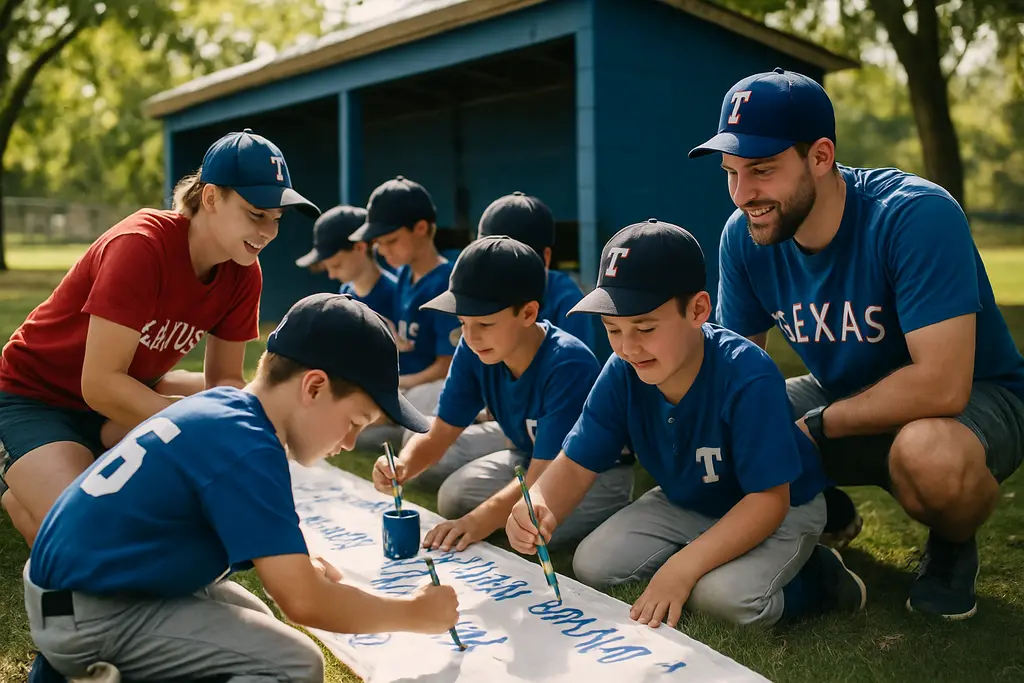
The 2026 Texas Rangers grants with Globe Life reached 18 nonprofit youth baseball and softball organizations across Texas, Oklahoma, and Louisiana, and the meaning went well beyond a dollar figure. The Texas Rangers Baseball Foundation and Globe Life awarded $120,800 through the program, with the recipients announced on September 3, 2026, and recognized before the Texas Rangers vs. Tampa Bay Rays game at Globe Life Field on September 4, 2026 Rangers announcement. In a state where small-town fields, school diamonds, and local leagues often carry family memories, these grants served the everyday spaces where young players learn the sport.
For Texas baseball families, support like this can show up in plain ways: lights that make evening practices possible, batting cages that give players more swings, uniforms that ease the cost on households, and field repairs that help a league keep its schedule. Those changes may not draw a box score, but they shape who gets to play and how often communities can gather around the game.
How Texas Rangers Grants Reached Local Fields
Texas Rangers Grants In Community Context
The 2026 cycle marked the 15th consecutive year of the Globe Life Baseball and Softball Grant Program. Since its 2012 start, the program has awarded more than $1.4 million to more than 165 organizations across the Rangers’ five-state territory: Texas, Louisiana, Oklahoma, New Mexico, and Arkansas program details. That longer timeline matters because youth baseball is rarely built in one summer. It is built through repeat investments, volunteer labor, and fields that stay usable year after year.
The 2026 Texas Rangers grants were not limited to one kind of baseball community. Recipients included organizations connected to school programs, booster groups, Little League programs, youth sports associations, and clubs serving both baseball and softball. That range reflects the way youth baseball works across the region: some players come through school diamonds, others through city leagues, and others through nonprofit groups that keep local competition alive.
The Recognition At Globe Life Field
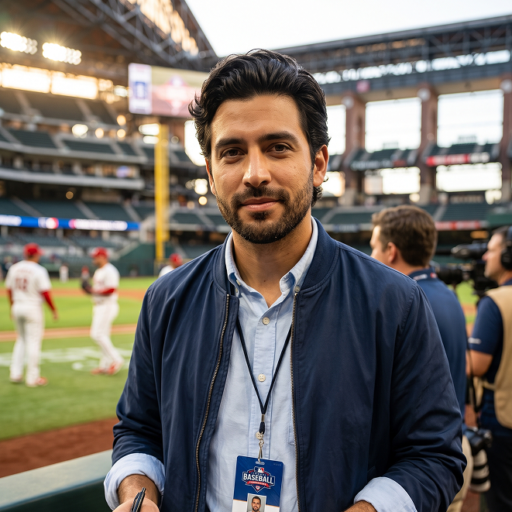
The public recognition at Globe Life Field on September 4, 2026, placed local youth organizations near the center of a Major League Baseball game night. The Rangers played the Tampa Bay Rays that evening, with first pitch listed for 6:05 p.m. CT. By the time the recognition happened, the grant awards had already been announced, so the ballpark moment worked as a public thank-you to groups that often operate behind the scenes.
That matters in Texas because youth coaches, parent volunteers, booster board members, and grounds helpers can spend long hours keeping programs ready without much attention. A pregame recognition at a big-league venue gave those community workers a rare moment of visibility. It also connected the professional club to the youth fields that feed local baseball culture long before any player reaches a college roster or pro scout’s notebook.
Projects That Changed Daily Baseball Work
Light, Turf, Cages, And Repair Work
The funded projects showed how practical needs drive youth baseball and softball. Several grants supported field infrastructure: Greater Helotes Little League received support for new field lighting; Sabine Jarvis Little League was tied to added lighting for Coach-Pitch and T-Ball fields; Paschal High School Athletic Booster Club was connected to installation of a synthetic-turf infield; East Brownsville Little League was linked to modular batting cage construction; and Twin Cities Youth Sports Association in Rule, Texas, was tied to completing a ballpark renovation.
Those are not abstract upgrades. Lighting can stretch practice windows after school and work. A turf infield can affect maintenance demands and field use. Batting cages can give coaches a controlled place to teach swing work without taking over the main diamond. Ballpark renovation work can decide whether a community has a playable home for league nights and local tournaments.
Gear For Teams That Need It
Other grants supported equipment, uniforms, repairs, and maintenance. Arlington Bowie High School, Asher Indian Baseball Boosters, Parent Booster USA Inc. – Tushka Baseball Booster Equipment, and Union Christian Academy were among the organizations tied to equipment or uniform support. Boys & Girls Club of the Red River Valley was connected to field repairs and maintenance. Center Point ISD was tied to flood damage repairs. Tom Bean Youth Sports Association was connected to batting cage construction, and Sundown Youth Softball was tied to field renovations.
The average award came to roughly $6,700 across the 18 nonprofits, based on the $120,800 total divided by the number of recipients, though individual awards varied by project scale grant award report. In youth sports terms, that amount can be the difference between delaying a project and getting a needed repair into motion. The 2026 Texas Rangers grants were especially meaningful because they met programs at the level of real work: lights, cages, turf, uniforms, and repairs.
Why The Regional Map Matters
Texas Communities Led The Recipient List
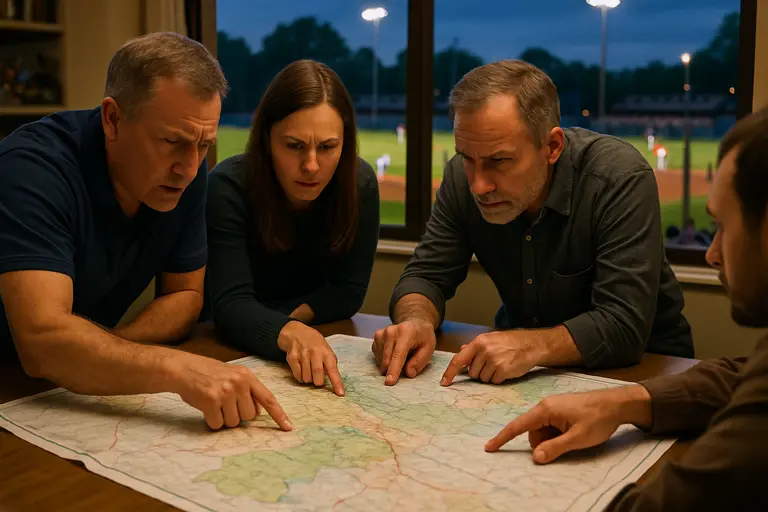
Of the 18 recipients, 12 were based in Texas, with communities including Arlington, Fort Worth, Paris, Center Point, Brownsville, Everman, Helotes, Sundown, Tom Bean, Rule, and Wilson. That spread says something important about the state’s baseball identity. The game is not held only by the major metro areas. It lives in border communities, Hill Country towns, Panhandle programs, North Texas suburbs, and school districts where Friday nights and weeknight practices share the same family calendar.
The Texas reach of the 2026 Texas Rangers grants also showed how community baseball depends on many kinds of local support. A high school booster club may need one kind of help. A Little League program may need another. A youth softball group may be working on field conditions that affect girls’ access to consistent games and practices. Each award carried a local story, even when the public announcement grouped the recipients together.
Oklahoma And Louisiana Stayed In The Rangers Footprint
The program also reached beyond Texas. Four 2026 grant recipients were based in Oklahoma, in Asher, Tulsa, Atoka, and Wapanucka. Two were based in Louisiana, in Monroe and Farmerville. That wider footprint followed the Rangers’ five-state territory for the program, even though the 2026 recipient list named organizations in three states.
This regional approach fits the way baseball loyalties and player development often work around Texas. Families cross county lines for games, teams travel for tournaments, and clubs build relationships beyond state borders. A grant in Oklahoma or Louisiana can still sit inside the same baseball orbit as Arlington because the Rangers’ community reach has long been tied to the broader Southwest.
Texas Rangers Grants And The Youth Pipeline
Access Starts Before Recruiting
Youth baseball conversations often jump to varsity rosters, college signings, and scouting attention. Those steps matter, but they come later. Access starts with whether a child has a safe place to practice, whether a league can afford equipment, and whether a field can handle another season. The 2026 Texas Rangers grants addressed that earlier stage, where the sport becomes part of a child’s weekly routine.
That early stage is where Texas baseball culture is formed. A T-Ball field with working lights can create a family habit. A batting cage can help a middle school player stay engaged. A repaired field can keep a league from losing momentum after weather damage. For readers following the broader player-development path, our coverage of Rangers Signing Day connects to the same local pipeline from a different point on the timeline.
What The 2026 Awards Said About Community Baseball
The grants also reminded Texas fans that community impact is not only measured by attendance or wins. It can be measured by a new cage in Tom Bean, field work in Sundown, flood repair support in Center Point, or lighting for young players in Helotes. These details are the bones of local baseball life. They help volunteers say yes when families ask whether a program will be ready for another season.
The clearest lesson from the 2026 awards was simple: baseball development in Texas depends on shared responsibility. Professional clubs can lend visibility and funding. Local nonprofits can manage the daily work. Families can keep showing up. Coaches can teach. Young players can build their first memories on fields that communities cared enough to maintain. That is where the Texas Rangers grants carried their deepest value in 2026—at the point where a child steps onto a local diamond and finds that the game is still there for them.