
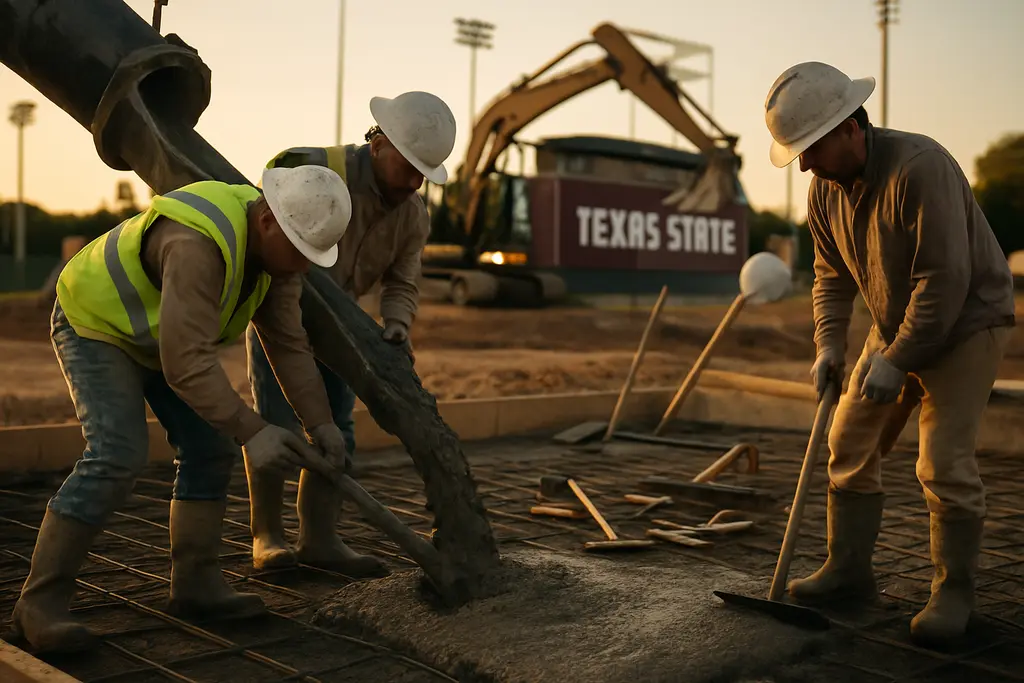

The Texas State pitching lab has moved into its official October 2026 construction window, giving Bobcat baseball and softball a facility project that connects player development with the everyday culture of San Marcos sports. Texas State lists the work as “Pitching Lab & Batting Cages – Phase I,” part of Ballpark Improvements for baseball and softball facilities, with construction scheduled from October 2026 through June 2027 on the university’s official project page.
That timing matters because facility projects are never just concrete, netting, lights, and turf. In Texas college baseball towns, a new training building can shape how athletes prepare, how coaches teach, how families see a program’s commitment, and how a campus ballpark fits into local identity. Texas State has placed a $4,500,000 estimated total budget on Phase I, according to the same official project listing, which gives the work a clear public frame rather than vague booster chatter.
Texas State pitching lab Construction Window
What The Official Timeline Says
The university’s published schedule gives a start month of October 2026 and a finish month of June 2027. As of October 21, 2026, that places the project inside its stated start window, though the official page does not provide a specific groundbreaking day in the material cited. That distinction matters for readers who follow Texas baseball facility work closely: the supported fact is the month-by-month schedule, not a claimed ceremony, shovel photo, or opening event.
For a college baseball and softball program, a June 2027 finish target also points to a practical rhythm. Construction can run through fall, winter, and spring planning cycles, while coaches and athletes continue to work around the existing competition and training demands. The project is not presented as a finished facility yet. It is a Phase I build with a published budget and a defined calendar, which lets fans judge progress against official markers rather than rumor.
Why Phase I Language Matters
Phase I tells the community that this is a first step in a facility plan, not a stand-alone naming splash with no training purpose attached. The title itself pairs the pitching lab with batting cages, which is a sports-first signal. Pitching and hitting development sit at the center of baseball and softball routines, from bullpen work and swing sessions to the daily repetition that rarely shows up in a box score.
On this site, we have tracked how facility upgrades in San Marcos can carry meaning beyond the foul lines, including prior coverage of Bobcat pitching development. The new project fits that same thread: Texas baseball communities tend to read ballpark construction as a public statement about standards, preparation, and the value placed on student-athletes.
What The New Training Space Includes
Texas State pitching lab Details From Board Materials
The February 2026 Texas State University System board materials describe a climate-controlled facility of about 12,000 gross square feet, with three baseball batting cages, three softball batting cages, and a pitching lab in the project scope board materials. Those details give the project its competitive and cultural weight. This is not only a shelter from weather. It is a dedicated practice setting for two programs that share the broader ballpark footprint.
The three-and-three batting cage layout also matters because it treats baseball and softball as parallel parts of the facility conversation. In Texas, where families may spend one weekend at a college baseball game and the next at a youth softball tournament, that shared investment has a local resonance. It says the daily work of hitters on both sides of the diamond belongs in the same planning conversation.
Climate Control And Texas Training Reality
A climate-controlled building carries special meaning in a Texas sports setting. Heat, sudden weather shifts, and long training calendars can affect how programs plan repetitions. The official materials do not claim performance outcomes, so no one should pretend a building automatically creates wins. What the materials do support is simpler and still meaningful: Texas State planned an indoor, controlled setting where pitching and hitting work can be scheduled with more protection from outdoor conditions.
That kind of space can help build routine. Baseball and softball are sports of repeated work: release points, bat paths, timing, pitch recognition, and recovery between sessions. A facility built around cages and a lab gives coaches a place to organize that work with fewer interruptions. For local fans, that is the kind of behind-the-scenes investment that can make a spring game feel connected to year-round preparation.
Why The Build Matters Beyond The Fence
A San Marcos Sports Identity Piece
College baseball in Texas lives close to its community. Parents, alumni, youth coaches, former players, students, and local business owners all read a ballpark differently. Some see recruiting value. Some see family weekends. Some see the campus growing around a sport that has long carried regional pride. The Texas State pitching lab fits that local story because it is tied to daily development rather than a one-night event.
San Marcos sits in a part of Texas where baseball and softball are woven into school calendars, select-ball travel, and spring gatherings. A new training facility on campus can become a point of reference for young athletes who see college players working in a serious setting. The official documents do not promise public access or youth programming, so that should not be assumed. Still, the visibility of investment can shape how a community talks about pathways from youth diamonds to college rosters.
Shared Facility Value For Baseball And Softball
The board materials make the shared nature of the project clear by naming both baseball and softball batting cages. That matters in a state where softball has its own deep community following and where facility conversations can sometimes tilt toward one sport. Here, the listed scope gives both programs dedicated cage space inside the same project frame.
There is also a cultural message in that balance. Texas sports families notice whether universities treat women’s and men’s programs as part of the same athletic neighborhood. The published scope does not answer every question about scheduling, access, or staffing. It does, however, show that the Phase I building was planned with both baseball and softball training needs in view.
How Fans Can Read The Phase I Timeline
What Is Known And What Is Not
The supported facts are clear: the project name, the $4,500,000 estimated total budget, the October 2026 to June 2027 construction schedule, the approximate 12,000 gross square feet, the climate-controlled design, the pitching lab, and the six total batting cages split evenly between baseball and softball. Those details come from Texas State’s official facilities page and Texas State University System board materials.
What is not established in the cited official material is just as important. The sources used here do not provide a specific public opening date, a ceremony date, a list of construction milestones by week, or operational policies for who will use the building at what times. Responsible local sports coverage should leave those items open until Texas State publishes them through official channels.
How This Affects Game-Day Conversation
Even before completion, construction can change the way fans talk around the ballpark. Facility work becomes part of pregame conversation, alumni visits, and recruiting talk in the stands. People point past the foul line and ask what is being built, how much it costs, and how it will help the athletes they follow. In a Texas baseball town, those questions are part of the culture.
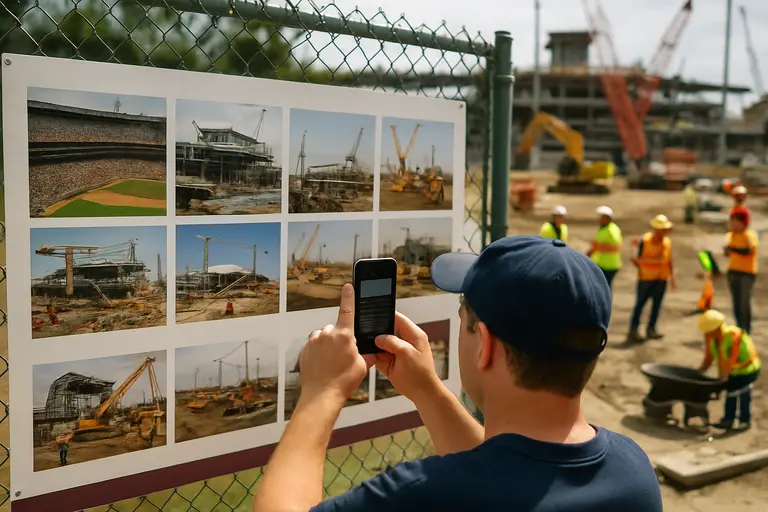
The build window also gives supporters a calendar to watch. October 2026 marks the start month. June 2027 marks the scheduled finish month. Between those dates, the most useful updates will be official ones: visible progress, university notices, and any published changes to budget or timeline. That measured approach respects both the excitement around the project and the need for accuracy.
Why Texas State pitching lab Matters In San Marcos
A Facility With A Local Baseball Pulse
The Texas State pitching lab matters because it places training infrastructure at the center of the Bobcat baseball and softball conversation. Fans often meet college sports through games, tailgates, concessions, and weekend rituals. Athletes experience the program through daily work. This project connects those two worlds by showing that what happens away from the crowd can shape the standard people see on game day.
For San Marcos, the story is not only about a building scheduled to be done in June 2027. It is about a university making a public facility commitment in a state where baseball and softball carry family memory, school pride, and local business energy. The strongest reading of the project stays grounded in the official facts: Phase I has a name, a budget, a schedule, a defined size, batting cages for both sports, and a pitching lab built for controlled training. That is enough to make it one of the Texas college baseball facility stories worth following closely.