
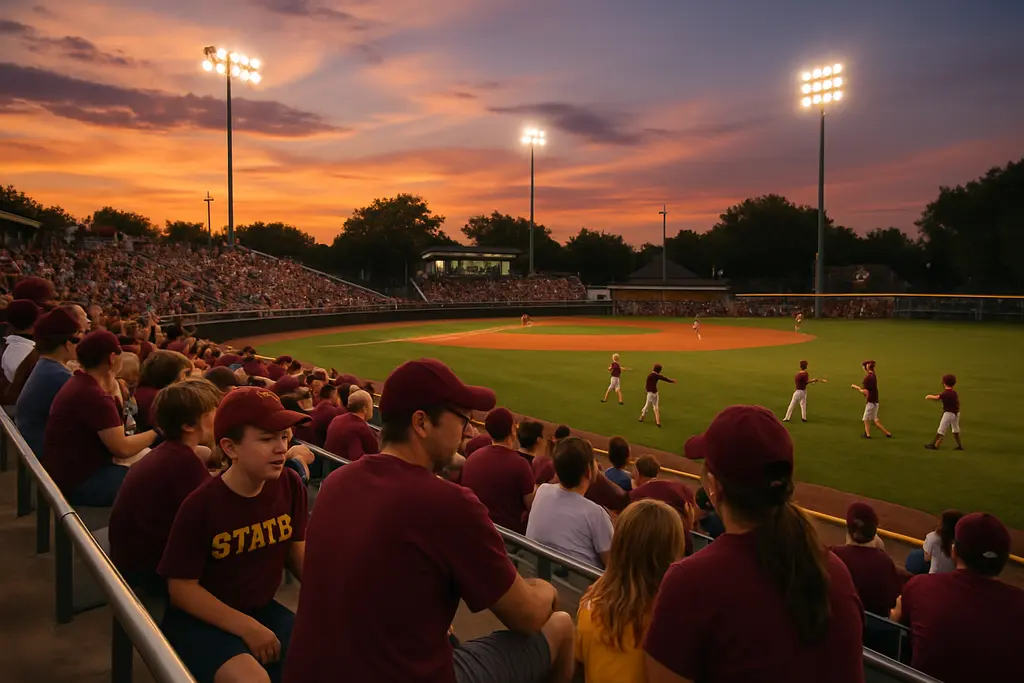

Texas State Baseball facilities are becoming part of a bigger San Marcos story: how college baseball can shape local pride, daily player development, and the way families gather around a ballpark. As of October 22, 2026, Texas State’s baseball and softball facility plans are no longer just drawings and donor announcements. The work already includes venue identity changes, new video displays, and a first phase for indoor training that was scheduled to move into construction during October 2026.
The cultural impact starts with scale. On January 6, 2026, Texas State Athletics announced two separate $2 million gifts from the Scott and Lynda Irvine family and the Chris and Shannon Rasmussen family as part of a $16 million baseball and softball facilities push. On April 7, 2026, the university renamed its baseball venue Irvine-Rasmussen Ballpark, tying the public face of the program to families whose gifts are connected to the facility project.
For San Marcos, that matters beyond the scoreboard. A college ballpark is one of the few places where students, alumni, parents, youth players, local business owners, and longtime residents share the same bleachers. The planned improvements give that gathering place a larger role in how the city sees itself on spring weekends and postseason nights.
Texas State Baseball Facilities And San Marcos Pride
Why The Ballpark Name Carries Weight
The move from Bobcat Ballpark to Irvine-Rasmussen Ballpark was more than a naming update. It placed donor support directly into the daily language of fans, players, broadcasters, and visiting teams. Every schedule listing, campus map reference, and game-day conversation now reflects the families connected to the baseball and softball investment.
That public connection matters in college sports culture. Texas baseball communities often grow through visible local commitments: a family business on the outfield wall, a former player funding a cage, a school district sharing a facility, or alumni returning for a weekend series. At Texas State, the major gifts announced in January 2026 gave the project a community face, while the April 2026 renaming gave San Marcos a new baseball landmark.
A Campus Venue With City Reach
The first phase of the baseball and softball project is listed at an estimated construction cost of $4.5 million, with design development complete, construction expected to start in October 2026, and completion expected by June 2027, according to Texas State’s Ballpark Improvements Phase I page. That phase includes batting cages and a pitching lab, two elements that speak directly to the way modern college programs train.
For San Marcos, the project signals that the university is treating baseball and softball venues as year-round development spaces, not only spring event sites. That shift can affect how youth players view the campus, how high school coaches talk about the program, and how local families connect the university to player growth. A ballpark that offers more training resources can become a symbol of what baseball work looks like in Central Texas.
Texas State has also planned a broader Ballpark Clubhouse project in its Fiscal Years 2026-2031 Capital Improvements Program. The preliminary budget listed the project at $12 million, with a clubhouse that includes training space, dressing rooms, a video editing room, hospitality space, and other support areas intended to move baseball operations directly into the ballpark, according to the May 2025 board materials.
Player Development Moves Closer To Home
How Texas State Baseball Gains Daily Reps
The planned training spaces speak to a simple truth in college baseball: culture is built between games. Indoor batting cages and a pitching lab are not ceremonial add-ons. They shape how hitters repeat swings during bad weather, how pitchers study movement, and how coaches build teaching routines across fall work, preseason training, and conference play.
For Texas State Baseball, that means development can sit closer to the center of campus life. Players do not need the promise of a big crowd to benefit from a better facility. They need reliable space, daily access, and tools that support coaching. The planned cages and pitching lab answer those needs in ways that can show up quietly before they show up in box scores.
The renovations announced in 2026 included three indoor batting cages, a pitching lab, new locker rooms, a weight room, a training room, coaches’ offices, and expanded spectator hospitality areas. Those details point to a program trying to connect the athlete side and fan side of the venue. A player’s daily routine and a family’s game-day comfort are often treated as separate topics, but at a college ballpark they feed the same culture. Better player spaces can help recruiting. Better fan spaces can make the ballpark part of more family calendars.
The Pac-12 Move Raises The Standard
Texas State is preparing to join the Pac-12 Conference starting in 2027. That shift raises the public standard around competition, travel, recruiting, and facilities. The facility project sits inside that larger athletic move, but the baseball impact is local first. San Marcos fans will judge the change by how the program competes at home, how the ballpark feels, and whether the venue can support bigger baseball moments.
The 2026 season gave the university a useful backdrop. Texas State baseball finished 37-26 and reached the NCAA Tournament, while softball finished 39-22 and also made the NCAA Tournament. The facility goals tied to the project included hosting NCAA Regionals more regularly, with the stated aim of hosting a Regional five times combined and drawing periodic top-25 consideration after reinvestment. Those are program ambitions, but they also carry civic meaning. Regional hosting brings visiting teams, families, and alumni into town, and it puts San Marcos in the college baseball conversation for more than a single night.
Game Day As A Community Meeting Place

Video Boards And Shared Moments
Before the 2026 season, Texas State installed new video boards at its baseball and softball venues. At Bobcat Ballpark, the display measured 38 by 26 feet and included more than 880,000 ultra-high brightness pixels. At Bobcat Softball Stadium, the display measured 26 by 16 feet with more than 360,000 pixels. Those upgrades changed how fans take in a game, especially families and casual spectators who follow replays, lineups, and between-inning features as part of the experience.
A better board does not replace the crack of the bat or the rhythm of a late-inning pitching change. It helps more people stay connected to what is happening. For children learning the sport, visiting relatives who do not know the roster, or alumni returning after years away, clearer game presentation lowers the barrier to feeling included.
Local Spending Starts Around The Schedule
The research provided for this story points to expected economic spillover for San Marcos from the facility upgrades, especially through better fan engagement, hospitality areas, and potential postseason hosting. Exact spending totals were not provided in the available research, so any estimate would be guesswork. What can be said is narrower and more useful: college baseball schedules create repeat local demand. Fans eat before first pitch, buy gas, meet friends after games, and bring visiting family members into town.
That is why ballpark comfort matters. Expanded hospitality areas and improved spectator amenities can extend the amount of time people spend at the venue and around it. If the program earns more high-interest dates, the effect can stretch beyond the ticket gate. Restaurants, hotels, retailers, and campus-area businesses all feel schedule-driven traffic in different ways. For more context on the same facility push, our earlier reporting on Texas State baseball facility upgrades tracked how player development and fan comfort are being linked at Irvine-Rasmussen Ballpark.
- Families gain a more comfortable setting for repeat spring outings.
- Youth players see college-level training spaces close to home.
- Local businesses benefit when bigger games bring more visitors into San Marcos.
- Alumni get another reason to return to campus around baseball weekends.
What Texas State Baseball Means For San Marcos
Texas State Baseball can be a point of connection in a city that already lives with the rhythms of a university calendar. The ballpark gives San Marcos a place where campus pride and town identity can meet without needing a rivalry slogan or a postseason bid to matter. A Friday night game can include students walking over from residence halls, parents driving in from Central Texas, former players stopping by the rail, and children watching college athletes up close.
The facility upgrades will not guarantee wins, hosting rights, or rankings. They do, however, give the program better conditions for the work that supports those goals. They also give fans a clearer reason to invest emotionally in the ballpark as a shared place. That combination is why the project matters culturally. It is not only about cages, a lab, a clubhouse, or hospitality space. It is about whether San Marcos can see college baseball as part of its regular community life.
As of October 22, 2026, the next key benchmark was the first phase tied to batting cages and the pitching lab, with completion expected by June 2027. If the project stays aligned with the university’s stated plans, Irvine-Rasmussen Ballpark will carry more than a new name. It will carry the chance for Texas State Baseball to deepen its place in San Marcos baseball culture, one practice day and one home series at a time.