
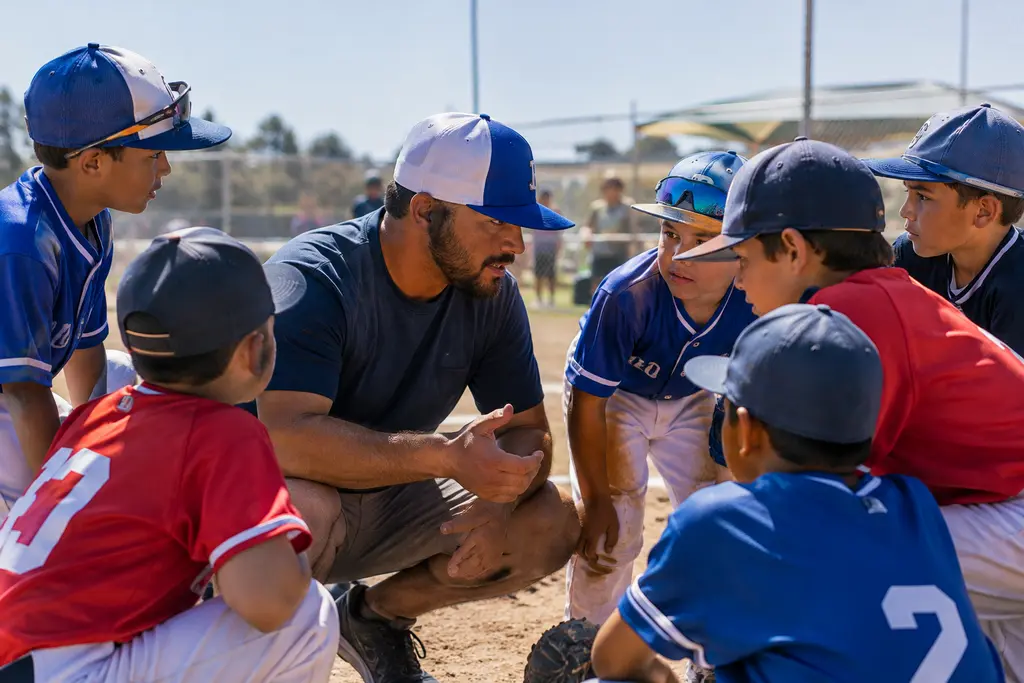

Texas youth baseball is being shaped by the people who show up before first pitch: parents hauling gear, coaches dragging infields, volunteers checking kids in, city workers keeping parks usable, and local sponsors helping cover the costs that families cannot carry alone. Across Texas in 2025 and 2026, the strongest stories were not only about box scores. They were about access, field space, tournament travel, and the belief that a ballpark can still be a gathering place for a town.
The community voice around youth baseball is practical. It asks whether a child has a glove, whether a league has safe lights, whether a coach has help, whether a family can afford another weekend on the road, and whether a town sees value when visitors fill hotel rooms and restaurants during tournament play. Those questions are sports questions, but they are also cultural questions. In Texas, baseball has long been one of the places where neighbors learn what they value together.
How Texas youth baseball Builds Community Voice
Texas youth baseball Starts With Access
Access became one of the clearest themes in 2026. On September 3, 2026, the Texas Rangers Baseball Foundation and Globe Life awarded $120,800 to 18 nonprofit youth baseball and softball programs in Texas, Louisiana, and Oklahoma through the 15th annual Globe Life Grant Program, with funds marked for facility improvements, equipment, uniforms, and related needs Rangers grant announcement. The same announcement stated that since 2012, the program had distributed more than $1.4 million to over 165 organizations.
That kind of support matters because youth baseball is full of costs that are easy to miss from the bleachers. A field needs dirt, bases, fencing, shade, lights, and maintenance. A player needs a glove, bat, helmet, cleats, and a uniform. A league needs coaches, registration systems, insurance, and places to practice. Grants do not solve every challenge, but they can keep a local program from asking families to absorb every expense.
That is why the grant story connects naturally with broader local support efforts across the state. Readers following the same thread can see how Texas Rangers grants have helped youth fields and nonprofits turn outside funding into local baseball access. The work is not abstract. It shows up when a kid receives gear, when a field is playable after rain, or when a league can keep registration within reach for more families.
Permanent Fields And Long-Term Trust
East Austin offered another example on October 24, 2026, when RBI Austin broke ground on its first permanent 33-acre Youth Development Complex. The project was slated for completion in late 2027. According to the research notes, RBI Austin aimed to double its impact from 1,706 youth served in 2025 to 3,400 annually once the complex opens.
A permanent complex can change the rhythm of a youth program. Instead of piecing together field time, coaches can plan. Instead of families chasing scattered practice sites, players can build routines. Instead of a nonprofit being seen only through seasonal leagues, it can become a neighborhood institution with a physical home. That matters in East Austin, where baseball, mentorship, and family schedules all intersect.
RBI Austin’s 2025 impact report, as summarized in the research, also showed the scale of volunteer labor behind that vision: 659 volunteers and 49,898 hours supporting programs for 1,706 youth. Those numbers tell a story Texas families understand. Youth baseball does not run on registration fees alone. It runs on adults giving evenings, Saturdays, rides, snacks, instruction, and steady encouragement.
Tournament Weekends And The Local Sports Economy
Beaumont Shows The Visitor Effect
Beaumont’s 2026 tournament calendar showed how youth baseball can move money through a local economy. The Spindletop Boom Tournament on March 28-29, 2026 involved 131 teams, including 52 from out of town, and brought in $202,800 in direct economic revenue, according to a Yahoo Sports report Beaumont tournament report. The same report said tournaments on April 11-12 and April 18-19 involved 270 teams and produced an estimated combined impact of $299,000.
Those weekends matter beyond the diamonds. Out-of-town teams need places to sleep, eat, refuel, and shop between games. Local restaurants see team tables. Hotels see family blocks. Gas stations and grocery stores see tournament traffic. For a city such as Beaumont, youth baseball becomes part of the sports economy, not just a park department activity.
The cultural side is just as meaningful. Tournament weekends bring together parents from different towns, kids wearing different caps, and local workers who may not know a bracket from a bullpen but understand what visitor traffic means for a small business. The ballfield becomes a front porch for the city. It shows visiting families how a community welcomes players, handles weather, maintains fields, and treats youth sports as a civic asset.
The Cost Side Of Travel Ball
Economic impact should be discussed with balance. A tournament can help hotels and restaurants while still adding pressure to family budgets. Entry fees, hotel nights, meals, fuel, and equipment can stack quickly. For some families, a strong local league remains the most realistic pathway. For others, travel tournaments offer competition, scouting value, and memories that last long after the final out.
That tension is why local support matters. If grants, donated gear, affordable clinics, and volunteer coaching can lower the cost of participation, more families can choose baseball without feeling pushed out by price. The healthiest youth baseball culture gives families options: neighborhood leagues, academy training, tournament teams, sandlot games, and school pathways.
Volunteer Hours, Gear, And Player Development
Coaches And Mentors Shape The Pipeline
For Texas youth baseball, the future is not only about stronger players. It is about stronger systems around those players. RBI Austin reported in 2025 that all nine graduates from its Baseball Academy went on to play college baseball, while one of three graduates from its Softball Academy went on to compete in college athletics. The organization also expanded academy teams from two to four in 2025, according to the research notes.
Those outcomes point to a key truth in player development: talent needs structure. A young athlete benefits from coaching, repetition, competition, academic support, family buy-in, and adults who can explain what the next level requires. In many Texas communities, that structure is built by volunteers and nonprofits as much as by private training businesses.
Other programs in the research notes showed how wide that support network has become. Dinger Disciples, a Christian baseball and softball camp in Central Texas, wrapped up its second year on July 4, 2026 with nearly 750 kids signed up and an average of about 450 kids per day during camp days. The camp was offered free to kids and operated through donations and community support. Diamond Dreams Sports of Texas Foundation was in its launch-year reporting phase and aimed to provide equipment, league fees, clinics, mentorship, and leadership programs, with baseline figures still to be tracked after records are completed.
Gear Can Decide Who Gets A Chance
Equipment support is one of the clearest ways a community can remove a barrier. The research notes reported that Turn Two for Youth, a national program active in Texas and other states, benefited 167,000 kids from 2015-2025, shipped 255 tons of gear, engaged more than 2,300 coaches, and supported 254 nonprofits. The program’s reported cost to outfit a player was about $35, compared with a typical retail cost of $475.
That gap explains why donated gear can change a season. A glove passed from one family to another is more than an item. It can be the difference between signing up and sitting out. Cleats can be the difference between confidence and hesitation. A helmet can be the difference between safety and risk. In a state where baseball is part of local identity, access to basic equipment is a matter of inclusion.
- Grants help leagues repair fields, buy uniforms, and cover equipment needs.
- Volunteers create the weekly rhythm that keeps practices and games moving.
- Tournaments bring visitor spending while raising real cost questions for families.
- Permanent facilities can give nonprofits a stable home for coaching and mentorship.
Sandlots, Academies, And The Culture Around The Game
Fun Still Has A Place Beside Competition
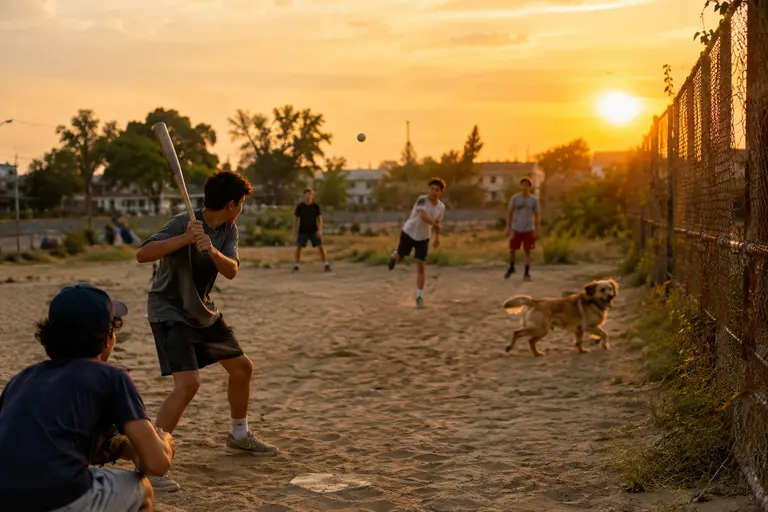
Not every baseball story is built around trophies. As of October 27, 2026, the research notes showed more than 30 sandlot teams in the greater Austin area and more than 100 nationwide. Informal games such as Long Time’s Sandlot World Series emphasized inclusion and fun over competition. The Long Time venue also diverted nearly 90 percent of its waste from landfills through sustainability efforts during 2025.
That sandlot thread matters for youth baseball because children watch adult culture. If they see baseball only as pressure, rankings, and fees, some will leave early. If they also see adults playing for joy, welcoming new players, sharing food after games, and caring for the grounds, the sport feels broader and more human. Texas baseball needs both serious development and low-pressure play.
The same balance appears in academy and nonprofit models. A child chasing college baseball needs reps, coaching, and competition. A child just learning the sport needs patience and room to fail. A town that supports both types of players builds a healthier baseball culture than one that rewards only the most advanced kids at the youngest ages.
Why Texas youth baseball Support Matters Now
Texas youth baseball now sits at the meeting point of sports, family life, local business, and community pride. The facts from 2025 and 2026 show a clear pattern: grants are reaching nonprofits, permanent facilities are being built, volunteers are giving major time, tournaments are driving local revenue, free camps are drawing hundreds of kids, and gear programs are helping reduce cost barriers.
The future will be shaped by whether communities keep listening to the people closest to the game. Coaches know which fields need work. Parents know which costs are hardest to carry. Players know where they feel welcome. Local businesses know what tournament weekends mean for their staff and sales. Nonprofits know which neighborhoods need consistent access, not just one-day attention.
That is the heart of the story. The next generation of Texas players will not be built by talent alone. They will be built by neighbors who decide that a clean dugout, a donated glove, a repaired backstop, a patient coach, and a welcoming field are worth the effort. In Texas, baseball’s future is still local, and its strongest voices are often the ones standing just outside the fence.