
Texas baseball facilities are no longer just backdrops for games; they are becoming training classrooms, neighborhood gathering places, and stepping-stones for young players trying to move from local diamonds to college clubhouses. As of November 1, 2026, the story stretches from East Austin to College Station, San Marcos, Katy-Fulshear, West Dallas, Mansfield, Willis, Copperas Cove, and Lubbock. Each project carries its own budget, mission, and timeline, but together they show how the state’s baseball culture is being built around access, instruction, recovery, and community use.
For families, the shift is easy to see. A covered turf area can keep a practice on schedule during a rainy week. A pitching lab can give a coach better feedback than eyesight alone. A youth complex with academic support can remind a player that the road through baseball is also a road through school. In Texas, where long drives and weekend tournaments are part of the baseball calendar, new and upgraded facilities are starting to affect who gets steady reps, who gets seen, and which towns become regular stops for families.
Why Texas baseball facilities Matter To The Pipeline
Texas baseball facilities And Year-Round Reps
The development pipeline depends on repetition. Hitting, throwing, footwork, strength work, video review, and recovery all require space and time. Good Texas baseball facilities reduce the number of lost practice days and make instruction less dependent on perfect weather or borrowed fields. That matters in a state where summer heat, spring storms, and long school calendars all press against player development.
P95 Academy near Katy and Fulshear opened on August 1, 2026, as a four-acre baseball and softball training site. The research notes identify TrackMan and Rapsodo technology, more than 5,000 square feet of indoor space, and school-year availability five days a week. Those details point to a broader trend: private training spaces are giving players more chances to blend cage work, data feedback, and skill sessions without waiting for a full team practice.
Academic Support Moves Into Baseball Spaces
RBI Austin broke ground on October 23, 2026, for its permanent 33-acre Youth Development Complex in East Austin. The project marked the organization’s first owned home, with plans for an outdoor multi-use ball field, a covered turf training center, a weight room, and academic support. Estimated completion was late 2027. The baseball meaning is clear, but the cultural meaning may be even larger: the field and the classroom are being planned as part of the same player pathway.
RBI Austin served 1,706 youth in 2025 and plans to grow to about 3,400 annual participants within three years of the facility opening, around 2030. That kind of increase would not only add more swings and innings. It would also bring more families into a shared baseball space in East Austin, where youth sports can carry neighborhood pride, mentorship, and structure after school.
College Projects Raise Training Standards
Texas A&M Builds Around Player Development
At Texas A&M, the baseball program has been building a 34,492-square-foot Player Development Center to replace old batting cages. The facility includes strength and conditioning, sports medicine, team meeting rooms, locker rooms, and pitching labs, with construction set to start in December 2025 and substantial completion listed for December 2026 in the Texas A&M regents agenda. For a college program, that mix of spaces says a lot about how player growth is now viewed: batting practice is only one piece of the day.
Strength work, medical care, and pitching analysis all sit closer to the field in newer college designs. That can help coaches connect bullpen sessions to recovery plans and weight-room goals. It can also affect recruiting conversations, because high school players and their families often look for signs that a college program can support the body, the mind, and the schedule demands of a long spring.
Texas State Plans A Clubhouse Project
Texas State University’s baseball and softball programs have proposed a clubhouse project of roughly 22,144 square feet at Bobcat Ballpark. The proposal includes a video editing room, batting cages, a pitching lab, and training spaces, with a preliminary cost of $12 million and inclusion in Fiscal Years 2026-2031 in Texas State System minutes. Because the project is proposed across that fiscal window, it should be read as a planned facilities direction rather than a completed build.
San Marcos baseball already carries a college-town feel, and facility planning there connects to more than roster needs. A clubhouse can influence how athletes spend their day, how coaches teach, and how fans understand the program’s ambitions. For more context on how ballparks connect to local districts, player spaces, and fan habits, this site has covered Texas baseball infrastructure through the same community lens.
Youth Access Extends The Baseball Map
Inclusive Fields Broaden Who Gets To Play
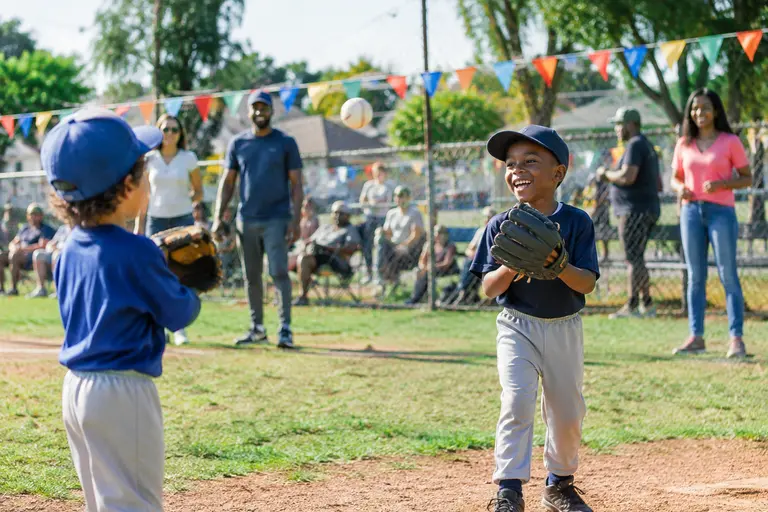
The Fields at Station 63 complex in Mansfield, previously tied to the Big League Dreams and Mansfield Sports Park identity, had a newly opened Miracle League Field as of August 18, 2026. Its purpose is direct: provide accessible baseball opportunities for youth with special needs. That kind of field belongs in any serious discussion of the pipeline, because a healthy baseball culture is not only measured by elite prospects. It is measured by who gets invited onto the diamond.
The Texas Rangers MLB Youth Academy at Mercy Street Sports Complex in West Dallas also shows how renovation work can stretch the life and usefulness of a community baseball site. Renovations reported in 2024 were funded in part by a $7 million MLB All-Star Legacy initiative. The work included replacing grass fields with durable turf using unused competition turf from Globe Life Field, plus new netting, scoreboards, fencing, and shade covers. Texas baseball facilities also carry memory when big-league materials are reused for youth players across town.
Tournament Towns Weigh Cost And Use
In Willis, a $40 million sports park broke ground in mid-2025 on 146 acres. The full facility was planned for 17 ball fields, with Phase I of eight fields expected to open in mid-2026. As of November 1, 2026, the research provided does not confirm whether that phase opened, so the supported point is that Willis had aimed to expand tournament capacity and youth league play in the region.
Copperas Cove was considering a 63-acre regional sports complex in 2026, with cost estimates between $42 million and $52 million. The concept included baseball and softball fields, local service, tournament use, and an estimated $38 million economic impact. Those numbers show why cities debate sports complexes carefully. Tournament weekends can fill restaurants and hotels, but public planning also has to weigh maintenance, access, traffic, and whether local leagues receive enough field time.
- East Austin shows how owned youth space can join baseball instruction with academic support.
- College Station and San Marcos show how labs, video rooms, and training spaces are entering college baseball planning.
- Mansfield and West Dallas show that access and inclusion are part of the player pipeline, not side stories.
- Willis and Copperas Cove show how tournament capacity can become a civic planning question.
What Texas baseball facilities Mean For Local Baseball
The future of the Texas development pipeline will not be decided by one building. It will be shaped by how each community uses its spaces after the ribbon cuttings are over. A college lab helps if coaches turn data into teaching. A youth complex helps if families can reach it, afford it, and feel welcome there. A tournament park helps if local players are not pushed aside by visitor schedules.
Texas baseball facilities now sit at the meeting point of player growth, town identity, and family routine. Texas Tech’s Dan Law Field at Rip Griffin Park offers one completed college example: a two-phase clubhouse project that broke ground in January 2022 and was completed with phase two in October 2023. The $14.5 million project added new batting cages, training areas, A/V rooms, a player lounge, hydrotherapy, and nutrition facilities. That list shows where the sport has gone in Texas: development is physical, technical, social, and daily.
For the Texas baseball community, the clearest takeaway is that facilities are not only about nicer buildings. They can change the rhythm of practice, the reach of youth programs, the recruiting pitch of college teams, and the weekend traffic of small and mid-sized cities. The best projects will be judged by more than square footage. They will be judged by whether more Texas players get coached well, stay connected to school, find a place to belong, and carry the game back into their neighborhoods.