PBR Texas Coverage has become one of the clearest ways to track how young baseball talent moves from local diamonds to wider scouting conversations. In Texas, that matters because high school baseball is not just a spring schedule. It is a community calendar, a family routine, a coach’s teaching lab, and a source of school pride from Keller to Aledo to Fort Worth Christian.
The value of this coverage sits in the details. A name on a ranking can draw attention, but the better story is how those names are measured, seen, and discussed through events, reports, and repeat looks. For underclass performers, especially freshmen and sophomores, early attention can help shape development goals without turning a teenager into a finished product before he has had time to grow.
Why PBR Texas Coverage Matters Locally
PBR Texas Coverage And The Scout Notebook
PBR Texas Coverage gives Texas baseball people a shared record. Coaches can see how players are being evaluated. Families can understand the language of scouting reports. Players can compare their own progress against verified event data and published observations, rather than hallway talk or sideline rumor.
That shared record matters in a state as spread out as Texas. A player in the Dallas-Fort Worth area, a player near Houston, and a player in Central Texas may not cross paths often during the school season. Event coverage and rankings create a point of comparison while still keeping the story tied to local programs, local coaches, and the work done after school on ordinary practice days.
Local Pride Behind Public Rankings
The August 12, 2026, On Campus Rankings placed Cole Koeninger of Keller High School at No. 1 among high school players headed to college. PBR listed him as an RHP/INF and reported a .436 batting average, 14 doubles, 3 triples, 10 home runs, 32 RBIs, and 49 runs scored, along with a 12–1 pitching record over 73.2 innings, a 1.14 ERA, and 130 strikeouts in the On Campus Rankings. Lucas Nawrocki of Aledo High School, listed as an OF/LHP, was ranked No. 13 nationally in that same ranking.
Those facts are bigger than a leaderboard for local baseball communities. Keller and Aledo both sit inside a region where Friday night lights get plenty of attention, yet spring baseball has its own gathering power. A highly ranked player brings students, parents, youth coaches, and younger athletes closer to the field. The ranking does not replace the game itself, but it adds a layer of pride for people who have watched the player develop before the wider baseball public caught on.
Underclass Names Turning Local Attention
Grady Emerson And The Fort Worth Christian Thread
Grady Emerson, a shortstop at Fort Worth Christian in the Class of 2027, was described by CBS Texas on May 11, 2026, as the top high school prospect in the country. CBS Texas also reported that he had played for U-15 and U-18 USA teams and had drawn comparisons to Bobby Witt Jr. because of his five-tool skills CBS Texas profile.
For North Texas baseball families, a player like Emerson makes the youth pipeline feel close and real. He is not an abstract name from a national list. He is tied to a school, a community, and a region where younger players can see what high-level skill looks like in a familiar setting. That does not guarantee any one player’s future, but it does make the standard visible.
Names That Broaden The Conversation
Late-August 2026 Texas ranking notes identified several top young players tied to the state’s underclass and freshman groups, including Koeninger, Emerson, Cooper Harris of Flower Mound High School, Connor Comeau of Anderson High School, and Savion Sims of Prestonwood Christian Academy. The research available here does not provide full statistical profiles for each of those players, so the fair reading is simple: these names were part of the Texas conversation, but each still needs to be watched through future innings, plate appearances, health, growth, and competition level.
That is where PBR Texas Coverage works best for readers who care about development. It can mark the moment a player enters a wider conversation without pretending that a ranking is the end of the story. Underclass baseball changes quickly because bodies change, roles change, and coaches ask young players to handle new demands. A freshman arm may become a two-way player. A shortstop may move across the infield. A catcher’s pop time may improve as strength and footwork mature.
Jaden Sandoval was profiled on August 30, 2026, with a 6.93-second 60-yard dash, pop times of 1.91 to 2.01 seconds, good bat-hand speed, strength, consistent barrel contact, and pull-side power. Those details show why event reports can help families understand more than a player’s school name or class year. They also show why development is best judged through multiple skills rather than one number.
Event Calendar As A Development Record
Summer ID Stops And Repeat Looks
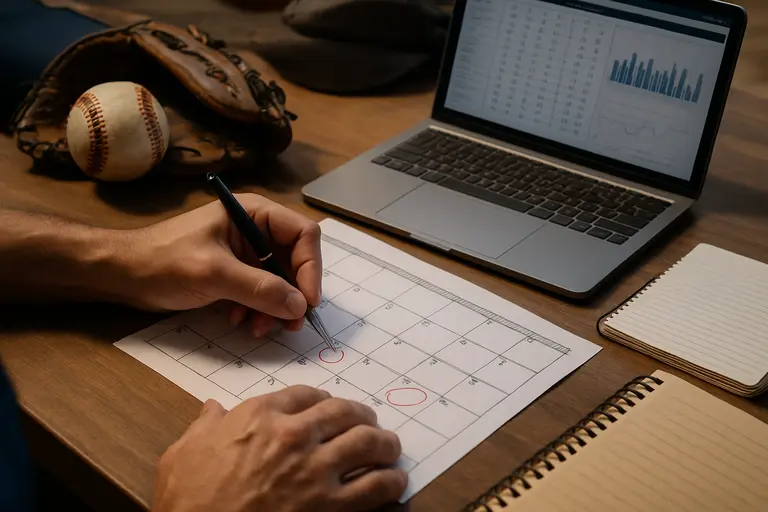
The Tomball Summer ID was held on June 9, 2026, at Tomball High School, with more than 20 players from all high school classes attending. Prep Baseball Texas staff released statistical analysis and scouting reports for infielders after the event. Other early-June 2026 Texas ID events, including Houston Summer ID, Fort Worth Summer ID, and San Antonio Summer ID, included Data Dives, Quick Hits, and positional or pitcher breakdowns, with underclass talent included in the coverage.
The local impact is easy to understand. These events give players a controlled setting to be measured, but they also create baseball traffic around high school and college venues. Parents drive in. Coaches reconnect. Players from different school districts share the same field. Local restaurants, gas stations, and hotels may see extra activity when larger events are held, though the research provided here does not include spending totals, so any economic reading should stay modest.
State Games And The Underclass Window
The 2026 Texas State Games – Upperclass took place September 18–20, 2026, at Weatherford College in Weatherford, Texas. Highlights published September 22 included Quick Hits for position players and pitchers. As of September 23, 2026, the 2026 Texas State Games – Underclass is scheduled for October 31–November 1, 2026, at Sam Houston State University in Huntsville, Texas.
That timing gives the underclass group its own stage after many upperclass evaluations have already been reviewed. For younger players, a fall event can be especially useful because it comes after summer ball and before another high school season begins. The player has time to take feedback into winter training, and coaches have a fresh reference point for what a player showed in a measured setting.
- For players, the value is feedback tied to performance, tools, and position fit.
- For families, the value is a clearer view of where development stands.
- For coaches, the value is another look at players outside the school schedule.
- For local baseball communities, the value is recognition that stays connected to Texas fields.
The Texas Program Invite, held June 11–14, 2026, in Fort Worth for 15U through 17U age groups, featured 22 teams and was invite-only. Because it brought young players into a scout-facing setting, it fits the larger Texas baseball pattern: competition, measurement, and community presence all meeting on the same weekend.
Readers tracking the Class of 2026 can also connect this discussion with our Texas Baseball Prospects: 2026 Class Spotlight, where the same regional pride and school-based development themes carry through the state’s older prospect group.
What PBR Texas Coverage Means For Texas Baseball
PBR Texas Coverage matters because it keeps Texas baseball grounded in names, dates, schools, venues, and measured performance. The best coverage does not strip players away from their communities. It shows how Keller, Aledo, Fort Worth Christian, Flower Mound, Anderson, Prestonwood Christian, Tomball, Weatherford, Huntsville, and Fort Worth each fit into the player development story.
That is the heart of Texas baseball culture. A ranking may travel nationally, but the work usually starts close to home: a parent catching bullpens, a coach staying late after practice, a teammate pushing a player through one more round, and a local crowd learning that the shortstop or right-hander they have watched for years is now being discussed beyond the county line.
For underclass performers, the fairest view is patient and specific. Tools matter. Stats matter. Event data matters. So does the time still ahead of them. PBR Texas Coverage gives fans and families a way to follow that growth without turning young athletes into finished stories too soon. In a state that treats baseball as both competition and community memory, that balance is worth protecting.