
Everman Youth Athletics became a bigger public sports story in 2026, not because of a confirmed new outside grant, but because Everman moved youth baseball and softball into a clearer city-run funding model. For families, coaches, and young players, that shift matters. It connects registration fees, sponsorships, concessions, field care, uniforms, and equipment to a public budget process that residents can track.
The available records show a local government decision rather than a new state, federal, or foundation grant award. That distinction is worth making. As of November 3, 2026, the verified material points to city oversight and city budgeting for the program, with revenue and expense projections tied to youth baseball and softball. In Texas towns where ballfields often double as gathering places, that kind of public structure can shape whether kids have gear, fields are playable, and families feel the program is steady enough to keep joining season after season.
Everman Youth Athletics Funding Moves Under City Oversight
What Changed On July 9, 2026
At a July 9, 2026, Everman City Council budget workshop, the city discussed assuming oversight of youth baseball and softball sports programming under the Parks & Recreation Commission. The workshop record also outlined projected revenue and expense lines for the program Everman budget workshop. That made the conversation about youth sports more than a seasonal sign-up issue. It placed local baseball and softball inside the same civic setting where streets, parks, staffing, and other public priorities are weighed.
For Everman families, city oversight can bring clearer expectations about who manages registration income, who approves spending, and how field and equipment costs fit into the larger parks budget. It also gives residents a public record to review. Youth sports can carry emotional weight in a community, but they also carry costs: uniforms, helmets, catcher’s gear, field supplies, concession supplies, umpires, and regular field upkeep. Putting those costs in front of council members gives the program a defined public footprint.
What Everman Youth Athletics Figures Show
The July 9 workshop projected revenue of about $70,000 per season from registrations, sponsorships, concessions, and fundraising. With two seasons, that would equal about $140,000 annually. The same workshop material projected a surplus of about $20,000 per season, or about $40,000 annually, based on the revenue and expense assumptions presented at that meeting.
Those numbers do not prove that every future season will perform the same way. Registration levels, sponsorship support, concession activity, weather, field needs, and equipment replacement can all affect the balance. Still, the figures show why youth baseball and softball are not just weekend recreation. They involve a working local sports economy, with parents paying fees, businesses considering sponsorships, volunteers raising funds, and the city planning for operating costs.
How The Baseball And Softball Budget Was Framed
Revenue, Gear, And Field Costs
The budget workshop listed several projected expenses for running youth baseball and softball. It included about $30,000 for practice and game equipment, uniforms, helmets, catcher’s gear, and related needs. It also described about $16,000 per season, or $32,000 per year, for field maintenance, officiating, and related operating costs. For anyone who has worked a youth baseball season in Texas, those categories sound familiar: safe gear, playable fields, and organized game-day operations are the base of a credible program.
The FY 2026 budget details cited in the workshop also included $35,000 for uniforms, $25,000 for equipment, $15,000 for field supplies, and $5,000 per season for both concession supplies and miscellaneous youth association costs. The figures show that city support for youth baseball is not a single check or one-time repair. It is a set of recurring decisions that touch the full player experience, from the first practice to the last tournament-style weekend on local fields.
- Uniform and equipment spending affects player safety, team identity, and family costs.
- Field supplies and maintenance affect practice quality, game schedules, and weather recovery.
- Concession supplies and fundraising affect the local sports economy around the park.
Why No New Outside Grant Should Be Assumed
Because this topic includes the word grants, it is fair for readers to ask whether Everman received a new outside award for youth baseball or softball. The verified material available for this report did not show a recent state, federal, or foundation grant awarded specifically to the program. What the records do show is a city-controlled funding framework, with the program’s income and costs placed inside local budget planning.
That does not make the story smaller. In many Texas communities, reliable local funding can be just as meaningful as a one-time grant. A city budget line can help define how equipment is replaced, how fields are maintained, and how public officials answer questions from parents and coaches. For Everman Youth Athletics, the key development in 2026 was the move toward formal city administration, not a verified outside grant announcement.
Why The Shift Matters Beyond The Scoreboard
Baseball Access Starts With Local Administration
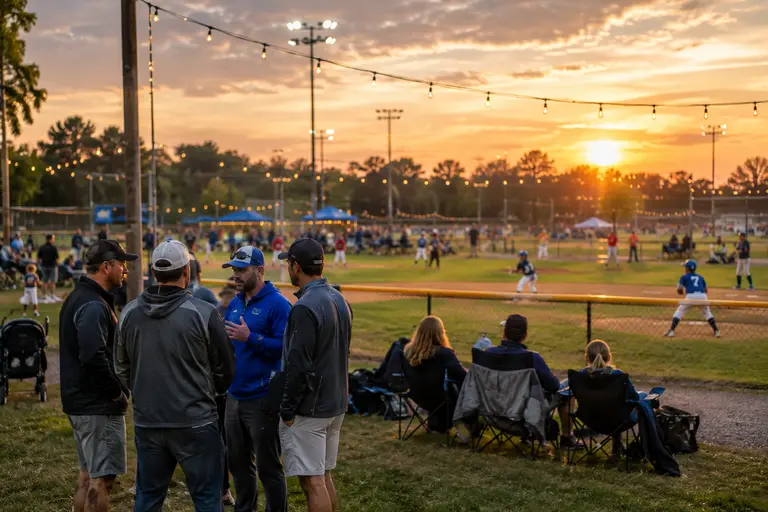
Youth baseball access often depends on details that do not show up in a box score. A family may decide whether to sign up based on registration cost, travel needs, uniform expectations, and whether practices are held on fields that feel safe and cared for. Coaches may decide whether to return based on how equipment is handled, how schedules are communicated, and whether they have support from the parks staff. City oversight cannot solve every challenge, but it can put these issues into a public process.
Everman’s 2026 action also connects to a wider Texas baseball theme: the game survives at the grassroots level through cooperation among families, city staff, volunteers, sponsors, and local businesses. For readers tracking similar support models across the state, our prior reporting on Texas youth baseball offers related community context. The Everman case is distinct because the verified record centers on municipal oversight and budget planning.
The August 11, 2026 Policy Vote
The City Council passed Resolution No. 2026-08-01 on August 11, 2026, approving the policy for baseball and softball programs and authorizing city administration and the Parks & Recreation Coordinator to implement and oversee it August council record. That vote gave the earlier budget discussion a policy home.
For local sports, policy can be easy to overlook because it does not swing a bat or make a throw across the diamond. Yet policy shapes who holds responsibility. It can determine whether fees are collected through city systems, whether expenses are recorded in a public budget, and whether changes must go back through public channels. That matters in a community program because trust is built not only through wins, but through clear rules and visible stewardship.
Why Everman Youth Athletics Matters For Local Baseball Access
Everman Youth Athletics sits at the point where public finance meets local baseball culture. The 2026 records show a program expected to generate registration, sponsorship, concession, and fundraising revenue while also carrying real costs for gear, fields, officials, and operations. That balance is the everyday business of youth sports in Texas: keep the program affordable enough for families, organized enough for coaches, and safe enough for players.
The most responsible read of the available information is straightforward. Everman did not have a verified new outside grant in the sources reviewed for this report. Instead, the city moved baseball and softball into a more direct public funding structure through workshop planning and an August policy vote. For parents and volunteers, that means the next questions are local ones: how the budget is managed, how expenses are reported, how sponsorships are handled, and how the fields serve the kids who show up with gloves in hand.
In a Texas baseball town, those questions carry meaning beyond one season. They speak to whether young players see the field as a place where they belong, whether families view the program as stable, and whether local businesses can support youth sports with confidence. That is why this funding shift deserves attention from anyone who cares about the future of community baseball in Everman.