
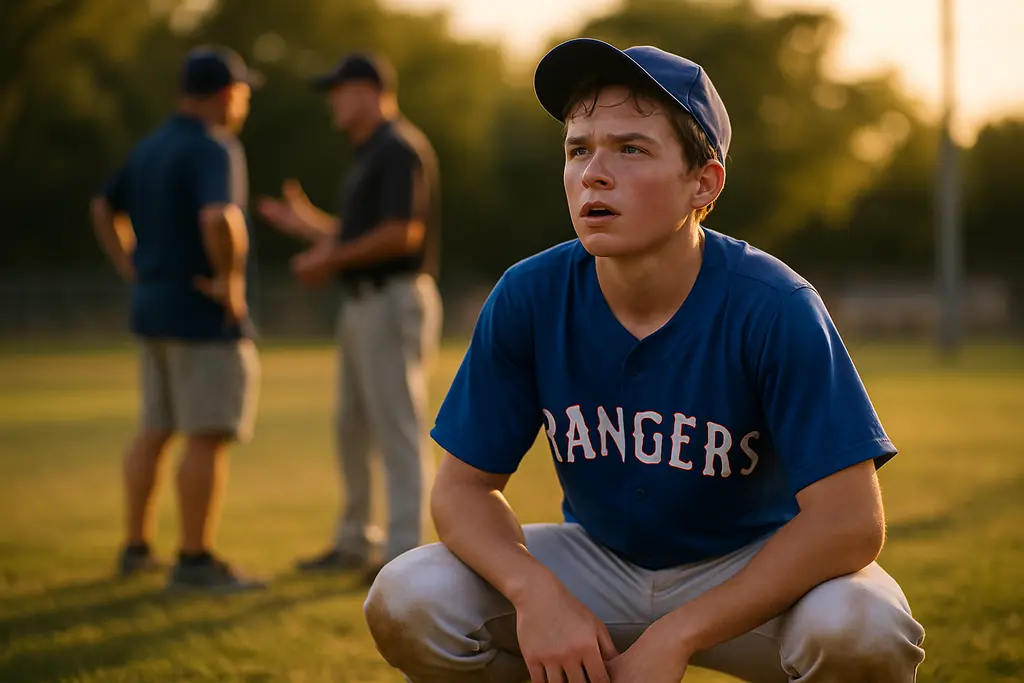

The Rangers Youth Academy has become one of the clearest measures of how the Texas Rangers Foundation has invested in youth sports in North Texas. The story is not built on one field opening or one signing class. It is built through years of free instruction, college pathways, community grants, and a West Dallas campus that has kept baseball and softball within reach for families who might otherwise be priced out of steady player development.
As of October 5, 2026, the most useful way to read the Foundation’s youth sports impact is through completed milestones. The Academy opened in December 2017 at the Mercy Street Sports Complex in West Dallas. Since then, official Rangers community materials have reported over 100,000 athletes welcomed into its programs and more than 115 athletes committing to play college baseball or softball Rangers community report.
Those numbers matter because Texas baseball culture depends on access as much as talent. A young player needs a field, a coach, a ride, equipment, reps, and adults who understand the recruiting and college process. The Foundation’s work has connected those parts in ways that show up in participation totals, college signings, and facility investments across the region.
Rangers Youth Academy Results In West Dallas
Rangers Youth Academy By The Numbers
The West Dallas campus gives the Texas Rangers Foundation a fixed home for year-round youth baseball and softball work. The Academy offers free instruction to athletes ages 7 to 18, with seasonal five-week training sessions in winter, spring, summer, and fall. That structure is significant in a state where travel ball, private lessons, and equipment costs can create a gap between young athletes with access and those without it.
Official figures show the program has scaled far beyond a neighborhood clinic. At the July 12, 2024 unveiling of Legacy Field, MLB reported that the Academy had an ongoing enrollment of 5,000 participants and had served 125,000 young people since opening Legacy Field report. In 2025, the Foundation served 18,000 young people through its Youth Academy at the Mercy Street complex, according to the research provided for this report.
For West Dallas, the Rangers Youth Academy has turned a Major League brand into a local sports service. That matters because the Rangers are not only lending a name. The Academy gives children and teenagers repeated exposure to baseball and softball instruction on an organized calendar, which is often the difference between casual interest and long-term participation.
Legacy Field And The Meaning Of Place
Legacy Field opened on July 12, 2024, after the Rangers repurposed turf from the club’s first World Series championship season in 2023. That detail carries weight in Texas baseball culture. The same playing surface tied to a championship moment was moved into a youth setting, connecting big-league memory with the daily work of children learning footwork, throwing mechanics, defensive angles, and the pace of team practice.
The field also helps explain why facilities are part of youth development. A safe, usable field can host practices, camps, skills events, and games. Turf can help reduce weather interruptions compared with natural grass, though the research does not provide maintenance data or usage totals for the field after its opening. What is clear is that the Foundation treated a championship artifact as a community asset rather than a museum piece.
From Fields To College Pathways
College Signings As A Sports Outcome
One of the strongest success markers for the Academy is the college pathway. In the class of 2025, 30 senior athletes from the Texas Rangers Youth Academy signed with college baseball or softball programs across the country. That figure sits alongside the broader official total of more than 115 Academy athletes committing to play college baseball or softball since the program opened.
Those signings are not only athletic achievements. For families, they can mean a new academic path, a move to a campus, and a different sense of what baseball or softball can provide. Texas has long treated high school baseball and softball as community events, but college placement adds another layer: players carry their neighborhood, school, coaches, and family support into the next level.
The Foundation also moved beyond on-field training in 2026. On January 9, 2026, the Academy launched a partnership with Education is Freedom to offer a free semester-long college advisory program. The program was designed to help high school athletes with college preparation, major selection, financial planning, and application processes. That work fits the needs of players who may have athletic talent but still need help with the steps required to enter college.
Skill Events And Early Confidence
The 2026 Pitch, Hit & Run skills competition returned to the Academy from May 4 through May 11. The event was open to youths ages 7 to 14, with opportunities to advance to national finals during the MLB World Series. Because that date has passed, the event now fits into the Academy’s 2026 record as another example of how the Foundation used the campus for structured competition, not only instruction.
Events like that are simple on the surface: run, throw, hit, record scores. In practice, they give younger athletes a first taste of measuring skills in a public setting. For baseball and softball communities, those early moments can help families decide whether a child wants more training, more games, or simply more time around the sport.
Grants Extend The Model Beyond One Campus
Regional Support For Local Programs
The Texas Rangers Foundation’s youth sports work is not limited to West Dallas. As of September 3, 2026, the 2026 Globe Life Baseball and Softball Grant Program had awarded $120,800 to 18 nonprofit youth baseball and softball organizations across Texas, Louisiana, and Oklahoma. The grants supported facility upgrades, equipment, uniforms, and other improvements. For a closer local read on that award cycle, our coverage of Texas Rangers grants tracks why field repair and gear support matter for community teams.
Since the grant program began in 2012, it has distributed more than $1.4 million to over 165 organizations throughout the region. In 2026, applications were accepted through June 30 for youth baseball and softball programs operating in Texas, Oklahoma, Arkansas, Louisiana, and New Mexico. That application window has closed, so the current record should be read as a completed 2026 cycle rather than an open call.
The grant work matters because many youth leagues do not need a headline project. They may need bases, uniforms, safer playing surfaces, or equipment that can survive a long summer. In that sense, the Foundation’s regional grant program supports the everyday parts of baseball and softball that families notice most: whether a field is playable, whether a team has gear, and whether a local nonprofit can keep serving children.
- Facility upgrades can improve daily practice and game conditions.
- Equipment and uniforms can reduce pressure on families and volunteer-run leagues.
- Regional grants can reach programs outside the West Dallas campus model.
Foundation Giving Sets The Larger Frame
The Texas Rangers Baseball Foundation has reported more than $80 million donated since 1991, including $4 million in college scholarships and $10 million in community grants. Those figures place youth sports work inside a larger community record. The Academy is the most visible baseball and softball hub, but the scholarships and grants show that the Foundation’s reach also includes academic support and local nonprofit investment.
For Texas baseball families, that wider frame matters. A field in West Dallas, a grant to a nonprofit program, and a college advisory session are different tools, but they point toward the same goal: keeping young people connected to opportunity through baseball and softball.
Why Rangers Youth Academy Investment Matters
A Local Model With Measurable Results
The success story of the Rangers Youth Academy is best understood as a local model with measurable results. The confirmed record includes tens of thousands of young people served, a large participant base, college commitments, a field tied to a World Series championship, and grant funding that reached organizations beyond Dallas-Fort Worth. Those are not abstract claims. They are the working pieces of a youth sports system.
The Rangers Youth Academy also shows how Major League Baseball can carry local meaning in Texas. A child practicing in West Dallas is not separated from the larger Rangers story; that child is part of it. When the Foundation invests in fields, instruction, advisory help, and nonprofit leagues, it strengthens the community roots that make baseball more than a schedule of games. It gives families a reason to see the sport as part of their own future.