
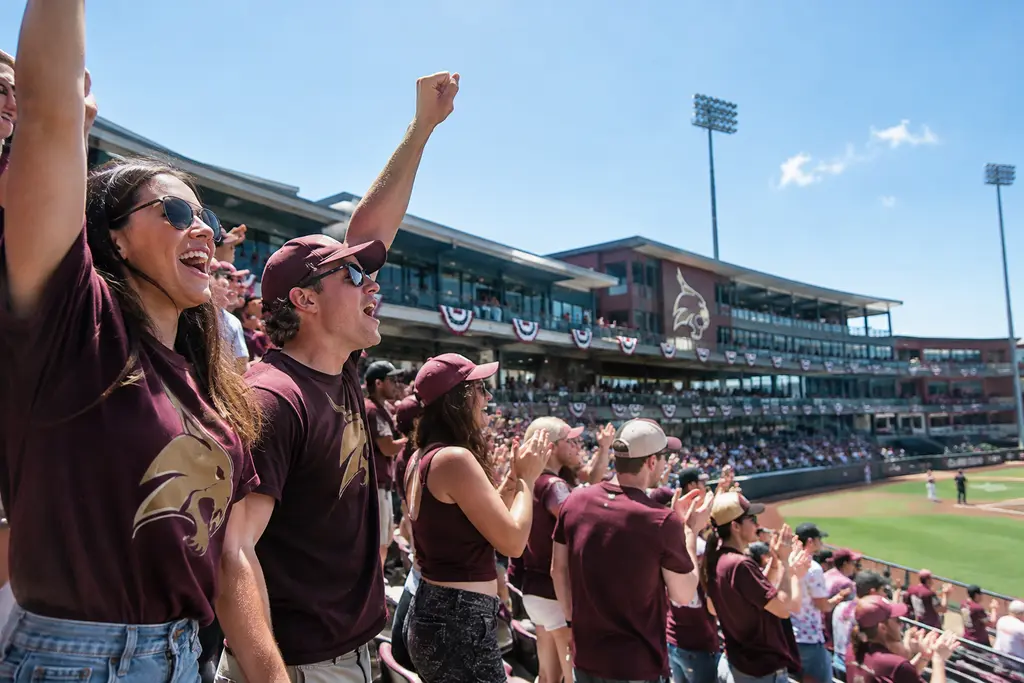

The Texas State ballpark story in San Marcos changed in a visible way on April 7, 2026, when Bobcat Ballpark was officially renamed Irvine-Rasmussen Ballpark after major alumni gifts tied to baseball and softball facility improvements. For a college baseball venue, a name change is never only a sign on a wall. It marks who the program believes it is becoming, who helped carry it there, and how a town recognizes its team on game day.
Texas State’s recent and planned ballpark work sits at the meeting point of player development, fan comfort, alumni giving, and local pride. The facility had already received earlier upgrades, including artificial turf, a video board, a batter’s eye, and updated outfield fences in 2019. Before the spring 2026 season, the ballpark added a larger all-digital videoboard, listed in research notes at 38 by 26 feet with more than 880,000 ultra-high-brightness pixels. Those are facility details, but they also shape how fans remember a Friday night, how recruits picture their training home, and how San Marcos frames Bobcat baseball as part of civic identity.
Texas State ballpark Upgrades And Bobcat Identity
Why Texas State ballpark Spaces Matter
College baseball identity is built through repetition: the walk from the parking area, the first view of the field, the sound of players in pregame work, and the places where families gather between innings. At the Texas State ballpark, the listed capacity of 2,500 spectators, with 2,000 seated and about 500 standing-room-only areas, gives Bobcat baseball a scale that still feels close to the field. Premium chair-back seating, bench-style bleachers, brick exteriors, a cantilever roof over covered seats, and five luxury suites all signal that the venue serves different kinds of fans without losing the college-ballpark feel.
The attendance marks in the research notes show why these spaces matter. The highest single-game attendance was 3,425 on April 10, 2023, against No. 19 Texas. Other large crowds included 3,283 on March 8, 2022, and 3,217 on April 22, 2025, both against No. 1 Texas. Those numbers are not abstract. In a city like San Marcos, crowds of that size change the rhythm around campus, raise the sound inside the park, and give younger fans a memory of Bobcat baseball as a shared town event rather than a small campus activity.
From A Scoreboard To A Shared Memory
The move from an older fixed-digit scoreboard to a new digital videoboard before the spring 2026 season matters because college baseball is full of pauses that become part of the fan experience. Between pitches, pitching changes, lineup introductions, and late-inning pressure moments, a videoboard helps frame the story for people in the seats. It can make player recognition more visible, give families a closer tie to athletes, and make rivalry games feel more organized without taking away the natural pace of baseball.
For San Marcos, that kind of upgrade also supports a broader sports identity. Texas towns often measure baseball culture through more than wins and losses. They measure it through weeknight routines, youth players wearing school colors in the stands, parents meeting neighbors near the concourse, and alumni returning to a place that still feels familiar. Irvine-Rasmussen Ballpark now carries donor names connected to alumni support, which places the program’s facility growth inside a local story of return, investment, and belonging.
Player Development Spaces Carry The Sports Story
Batting Cages, Pitching Lab, And Daily Work
The next stage is not only about what fans see from the stands. Texas State’s official facilities page says Ballpark Improvements Phase I includes new batting cages and a pitching lab for both baseball and softball, with an estimated budget of $4.5 million and a construction window listed to begin in October 2026 with substantial completion by June 2027 Ballpark Improvements Phase I. That schedule places the work directly in the current planning cycle as of October 31, 2026.
Those spaces speak to the quieter side of baseball culture: the hours before anyone buys a ticket, the swing work after a tough series, the pitching feedback between starts, and the shared training standards across baseball and softball. A pitching lab can become part of how a program teaches movement, command, recovery routines, and preparation. Batting cages shape the daily rhythm for hitters who build timing over months, not moments. These are not glamorous details, but Texas baseball has always honored the work behind the game.
Softball And Baseball In One Development Frame
The inclusion of both baseball and softball in Phase I is important for campus identity. It places the two diamond sports near each other in the public story of Texas State athletics. Open plazas between the baseball and softball venues, along with amenities such as restrooms, ticket office space, and merchandise areas noted in the research, point toward a shared event district rather than two isolated fields.
That matters for families who may attend more than one sport, for young athletes who see both programs as models, and for local supporters who want campus game days to feel connected. A shared baseball-softball area can help create a stronger sense of place. It also gives San Marcos a clearer sports gathering point on campus, where the culture is not limited to one roster or one season storyline.
Fan Experience, Donor Signals, And Local Business
Hospitality As A Community Signal
The FY 2026-2031 Capital Improvements Program includes a planned $12 million ballpark clubhouse with athletic training space, player dressing rooms, a meeting room, a video editing room, storage, new batting cages, a pitching lab, and hospitality space Capital Improvements Program. That mix of athlete-facing and fan-facing space tells a clear story: Texas State is treating baseball infrastructure as both a competitive tool and a gathering place.
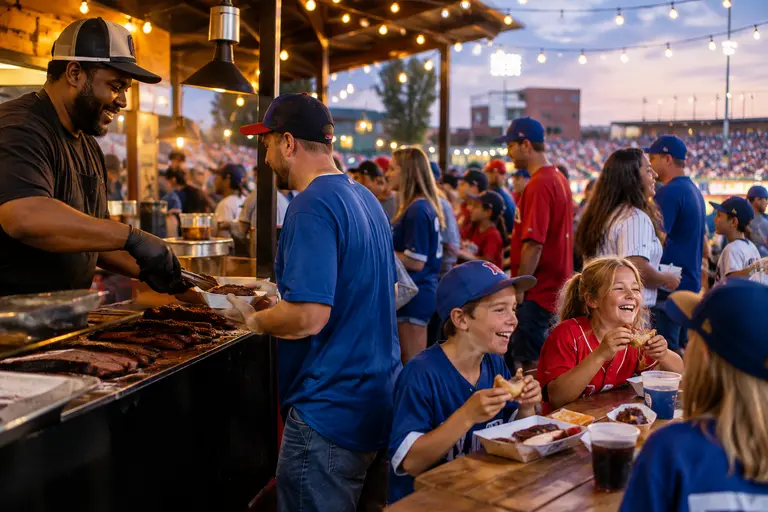
Hospitality space can change how alumni groups, families, and community partners experience a game. It gives donors a place to gather, but it also creates a stronger bridge between athletics and local relationships. In college baseball, that bridge often matters because support grows through repeated contact: a former player returning for a series, a local sponsor hosting guests, or a family building a spring routine around home games.
Game Day Culture Beyond The Gate
San Marcos businesses can feel the presence of a full ballpark through pregame meals, postgame stops, hotel stays for visiting families, and merchandise interest around campus. The research does not provide a measured dollar impact for the ballpark upgrades, so any claim about direct spending should be treated with care. What can be said is that better amenities and clearer venue identity tend to give fans more reasons to arrive early, stay longer, and bring guests back.
For readers tracking how facilities shape Texas baseball culture, the same theme appears across the state: a ballpark becomes part of local identity when it serves players, families, alumni, and nearby businesses at once. That connection is explored through another San Marcos-focused angle in Texas State baseball facilities, where facility investment is tied to local game-day culture.
Why Texas State ballpark Matters In San Marcos
A Ballpark Name With Local Weight
The Texas State ballpark now carries the Irvine-Rasmussen name, and that matters because names shape memory. Fans will not only say they are going to a baseball game; they will say they are going to Irvine-Rasmussen Ballpark. Over time, that name will attach itself to walk-off wins, rivalry crowds, player debuts, senior days, and family traditions. That is how a venue becomes part of a town’s sports language.
The facility work also reflects a practical truth about college baseball in Texas: programs compete through coaching, recruiting, and development, but they also compete through the places where athletes train and fans gather. New batting cages, a pitching lab, videoboard improvements, premium seating, plazas, and a planned clubhouse all point toward a program trying to make its home field speak clearly.
What The Enhancements Say About Bobcat Baseball
The strongest impact may be cultural. A better ballpark gives San Marcos a more defined spring sports center. It gives alumni a reason to return with pride. It gives young players a place to watch college athletes work close up. It gives Texas State baseball and softball a shared physical presence that says diamond sports belong near the center of campus life.
That is why these enhancements matter beyond construction budgets. They tie daily player development to public memory. They connect donor support to weekend habits. They give the Bobcats a venue that can hold large rivalry crowds while still feeling rooted in San Marcos. The facility story is still being written, especially with Phase I listed through June 2027, but the direction is clear: Irvine-Rasmussen Ballpark is becoming one of the places where Texas State’s local sports identity is seen, heard, and passed from one generation of fans to the next.