

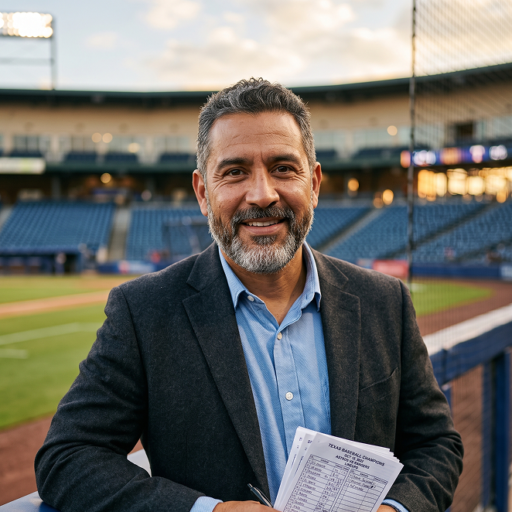
Texas State Facilities now sit at the center of Bobcat baseball’s player-development story, not as a side note but as a measure of where the program wants to stand before its planned Pac-12 competition begins in 2027. The baseball and softball facility plan described in the research calls for a phased investment of roughly $16 million, beginning with indoor batting cages and a high-tech pitching lab before a later clubhouse-centered buildout. For San Marcos, that is not just construction talk. It is a sports culture question: how does a college town build spaces that help athletes train, keep families connected to the program, and give local supporters a clearer stake in the next era?
The figures in this story are not only players and coaches. They include donor families, system regents, athletic planners, construction teams, and the supporters who connect Bobcat baseball to San Marcos business life. Texas baseball has always been built as much by communities as by box scores. In this case, the next chapter is being written through practice space, recovery areas, meeting rooms, and gifts tied to a visible local ballpark.
Texas State Facilities And The Player Pipeline
Texas State Facilities In Baseball Terms
The baseball meaning of Texas State Facilities starts with repetition. The researched plan for Ballpark Improvements Phase I describes a roughly $4.5 million Pitching Lab & Batting Cages project, with a 12,000-gross-square-foot, climate-controlled building planned to house three baseball batting cages, three softball batting cages, and a new pitching lab. The project was described as being in design-development status, with construction estimated to start in October 2026 and finish by June 2027. As of October 27, 2026, the available research does not confirm whether construction had begun, so the careful reading is that the project carried that estimated window rather than a confirmed start date.
That distinction matters because baseball families track these projects closely. A covered cage is not glamorous in the way a packed Friday night ballpark can be, but it can affect daily work. Hitters need swings on class days, during bad weather, and outside normal team practice blocks. Pitchers need controlled settings where coaches can compare sessions, discuss delivery patterns, and plan workloads. The research does not list equipment models inside the planned pitching lab, so any claim about specific tracking systems would go beyond the facts. What is supported is the planned purpose: a dedicated baseball and softball training space built around cages and pitching development.
From Practice Space To Player Confidence
Phase II in the research points to a roughly $12 million step with a clubhouse, weight room, training room, locker rooms, coaches’ offices, and player lounges. Those spaces speak to the off-field side of player development. College baseball seasons ask athletes to move between class, strength work, treatment, video or meeting time, travel, and games. When those functions are spread out or crowded, the daily rhythm can wear on a roster. When they are closer to the field, the program can ask for higher standards without making every day feel scattered.
This is also where the local story matters. A facility plan can be read as a recruiting tool, but in San Marcos it is also part of how the ballpark sits inside community life. Families who come for weekend series see whether the program is investing in athlete care. High school players from Central Texas notice whether Texas State looks serious about development. Local businesses see more reasons for alumni and families to make the ballpark part of a full weekend in town.
Football Investment Sets The Training Standard
A Completed Project Inside The Same Athletic Culture
Baseball is not football, and no serious reader should treat the two sports as identical. Still, Texas State’s recent football facility work shows how the athletic department has already framed training investment. The UFCU Stadium South End Zone Complex underwent a $37 million upgrade completed in October 2025, with enhancements including an 8,000-square-foot weight room, a players’ lounge, training area, new team meeting rooms, and updated locker rooms, according to Texas State’s facility report.
For baseball, that completed football project offers a standard more than a direct comparison. It shows that Texas State has already placed value on athlete-centered spaces: weight training, recovery, meetings, recruiting, and team gathering areas. Those same categories appear in the planned baseball and softball Phase II work. The scale differs, but the language of development is similar. A player does not improve only in the batter’s box or on the mound. He improves in the weight room, in recovery, in meetings, and in the quiet daily habits that a program’s physical setup can either support or hinder.
Why Shared Standards Matter
Shared facility standards can affect how a campus talks about athletics. If one program receives modern meeting and training areas while another lags, recruits and families can read that gap quickly. The planned baseball and softball work signals that the diamond sports are part of the same institutional push, even if the projects move on separate timelines. In Texas, where college baseball families often compare campuses across the state, the message matters.
The Pac-12 timeline sharpens that message. The research places the planned baseball and softball improvements ahead of Texas State’s start of Pac-12 competition in 2027. That timing does not guarantee wins, player jumps, or postseason results. It does give the program a chance to match a higher competitive setting with improved training space. For a town that has watched Bobcat athletics grow, that is a concrete way to see ambition.
Donor Families And San Marcos Stakes
Private Gifts And Public Identity
Philanthropic support sits near the center of the baseball and softball redevelopment. The research notes multiple gifts, including support from the Irvine and Rasmussen families, totaling $4 million pledged toward an approximately $15 million redevelopment of the baseball and softball complex. Those names matter in a local sports story because facilities are not abstract to the people who fund them. They become part of the memory of a place: where players trained, where families gathered, where alumni returned, and where a campus signaled its priorities.
That connection is why a ballpark project can carry cultural weight in San Marcos. Texas college baseball is built on regional ties, and those ties often begin before a player reaches campus. Youth coaches, high school programs, travel teams, and parents all watch how nearby universities treat development. A dedicated pitching lab and indoor cage building can speak to that network without needing a slogan. For a related local look at the training-space piece, our coverage of the Texas State pitching lab tracks how the project fits the Bobcat baseball conversation.
The Local Business Connection
Facility work also touches the local economy in ordinary but meaningful ways. A stronger baseball weekend can mean visiting families buying meals, booking rooms, stopping downtown, and returning for future series. The research does not provide economic-impact figures for the baseball project, so no exact spending claim should be made. What can be said is that college baseball attendance and travel patterns often place family spending near the venue and across the host city. In San Marcos, that gives facility planning a community frame as well as an athletic one.
Campus Projects Beyond The Diamond
What The ALERRT Approval Shows
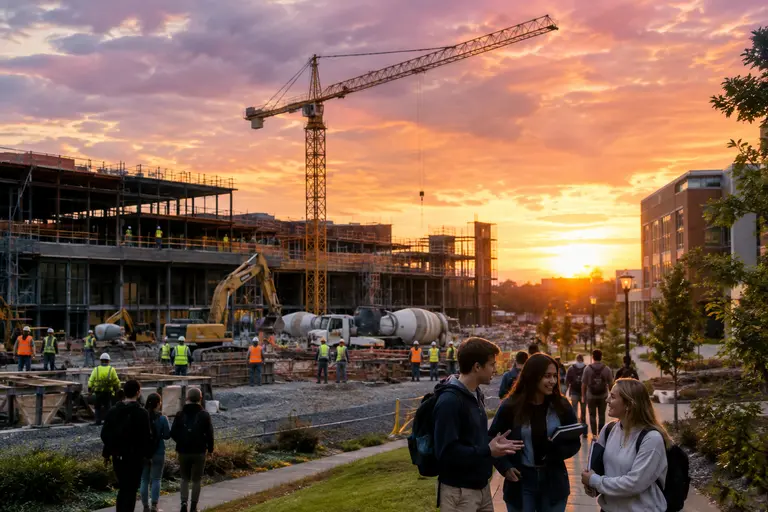
Not every Texas State capital project is an athletics project, and the ALERRT Center work should not be described as a baseball facility. It does, however, show the scale of institutional planning happening on campus. In February 2026, the Texas State University System Board of Regents approved about a $25 million upgrade for the ALERRT Center, including a new 14,800-square-foot administrative building and a 16,400-square-foot climate-controlled logistics warehouse, with construction expected from April 2026 to April 2027, according to the Texas State newsroom.
That matters to the sports discussion because athletic projects do not happen in isolation. They share a campus with academic, training, safety, logistics, and student-service priorities. When baseball supporters talk about batting cages, clubhouses, and training rooms, they are talking inside a larger university capital plan. The strongest sports arguments are often the ones that understand that setting. A baseball project must be justified not only by what it gives a roster, but by how it fits a university and a town.
Keeping The Baseball Claim Clear
The supported baseball claim is specific: Texas State has been planning phased baseball and softball facility improvements tied to indoor cages, a pitching lab, and later team-development spaces. The supported campus claim is separate: Texas State has other major facility work approved or completed, including the ALERRT project and the football South End Zone Complex. Keeping those facts distinct helps fans avoid inflated claims while still seeing the pattern of investment around campus.
Why Texas State Facilities Matter To Bobcat Baseball
For Bobcat baseball, Texas State Facilities matter because development is daily before it is public. Fans see a weekend starter, a late-inning swing, or a clean defensive play. Coaches see the months of cage work, strength sessions, treatment time, and teaching moments that helped create that result. Better spaces do not replace coaching, scouting, or player discipline. They give those things a place to happen with fewer barriers.
The best measure of Texas State Facilities will not be a ribbon-cutting photo or a construction budget by itself. It will be whether players use the space to build steadier routines, whether coaches can teach more clearly, whether recruits and families feel the program’s commitment, and whether San Marcos sees the ballpark as part of its shared sports identity. That is where facility planning becomes a baseball story rather than a building story.